
 Art Museums in Paris
 Zoos in Rome
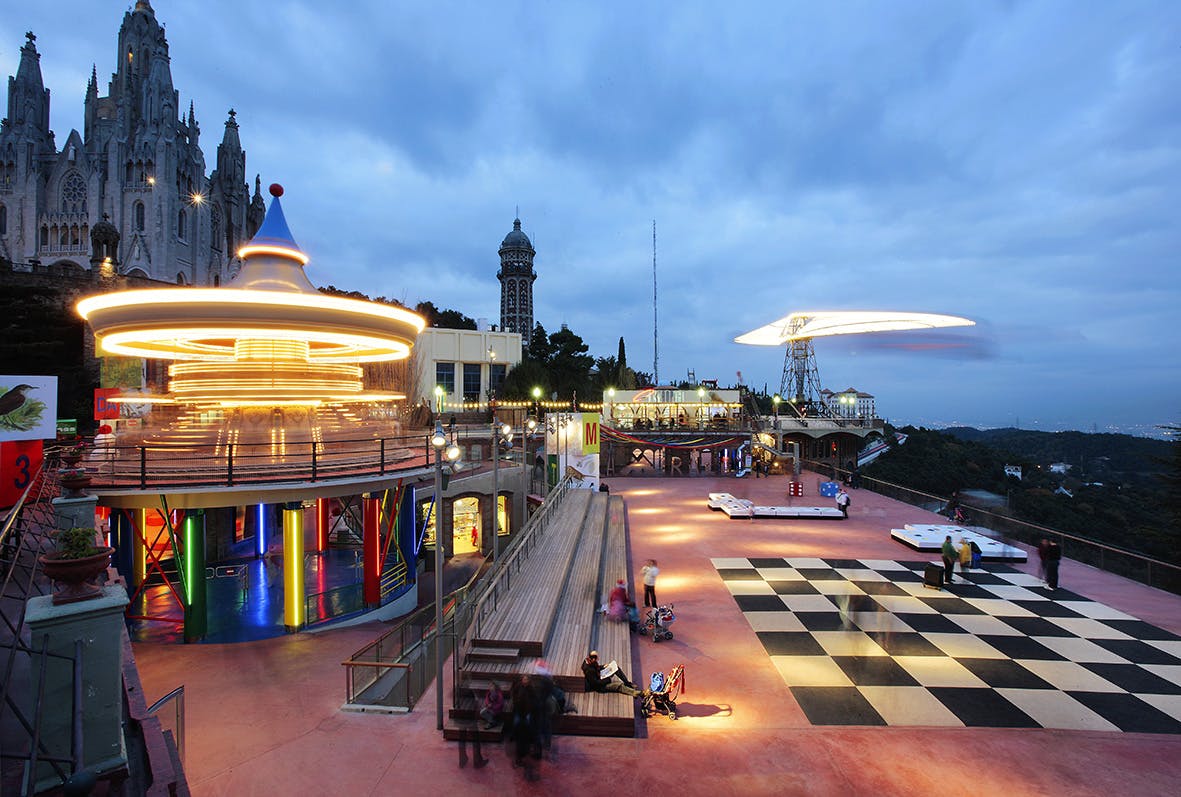 Theme Parks in Barcelona
 Historical Sites in Rome
 Distilleries in Edinburgh
 Fado Shows in Porto
 Paris
Paris Vienna
 Rome
Rome Florence
 Barcelona
 Porto
Porto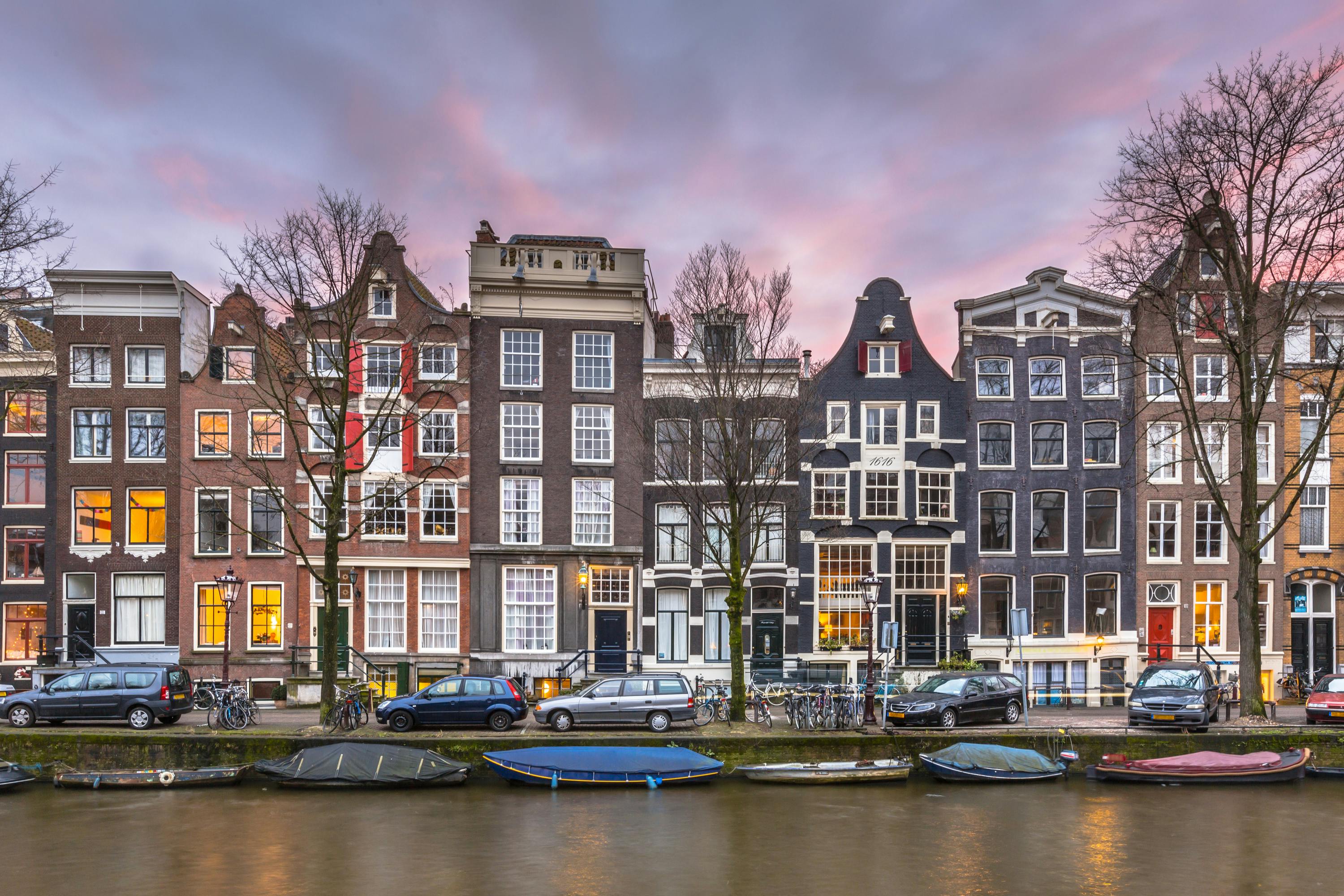 Amsterdam
 Venice
 London
 Lisbon
 Berlin
 Milan
Milan Interactive Museums in New York
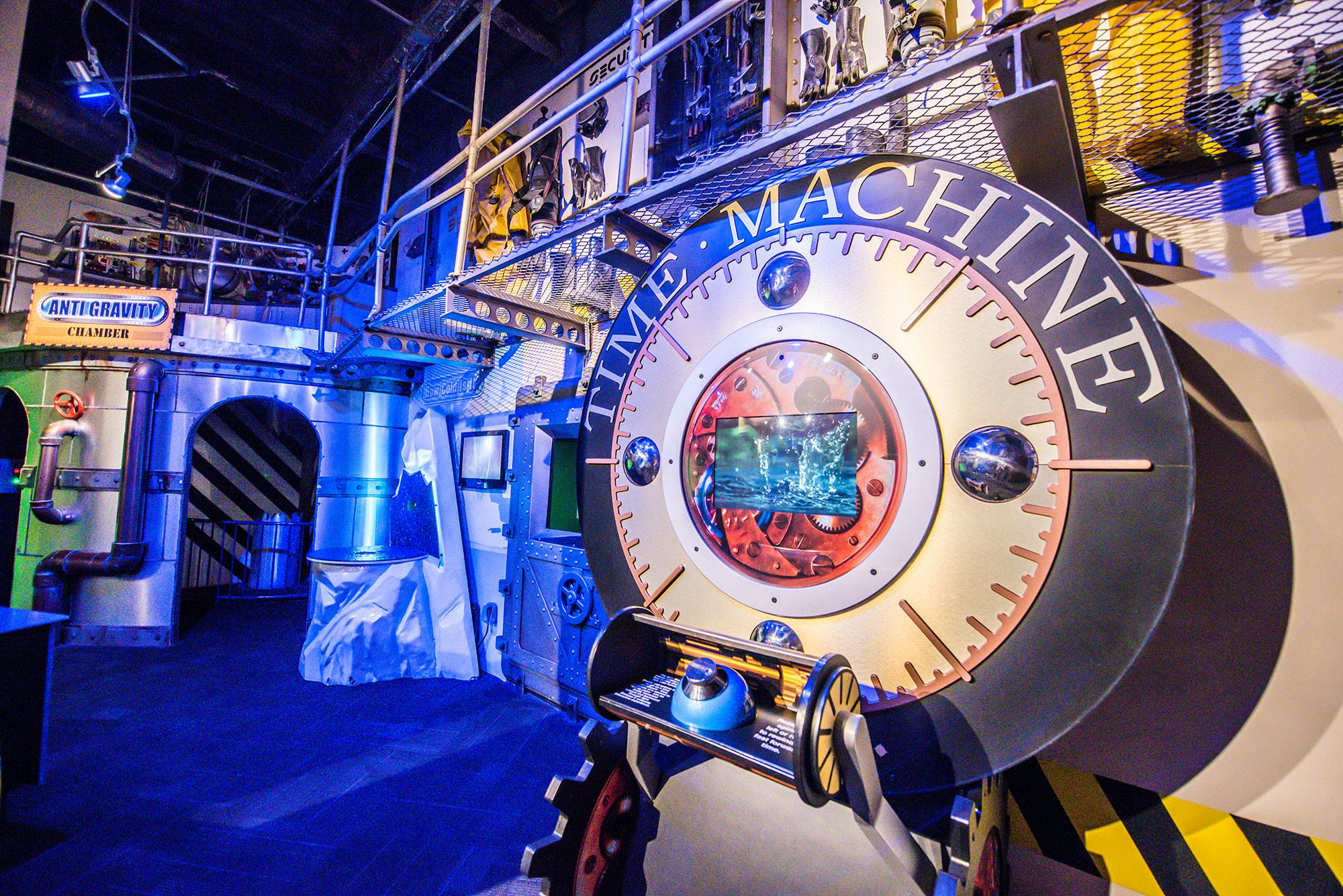 Theme Parks in Orlando
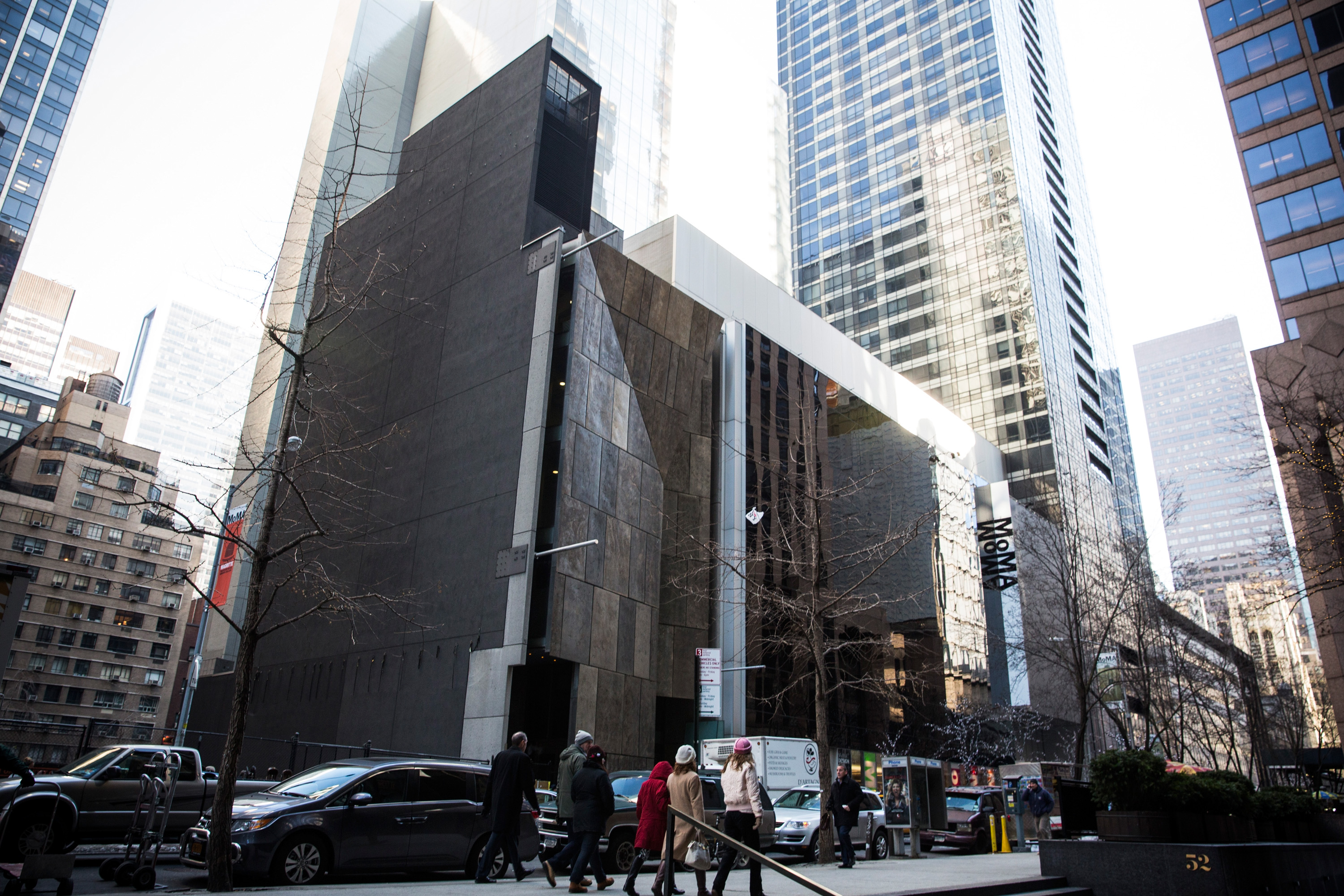 Art Museums in New York
 Zoos in Orlando
 Art Museums in Chicago
 Aquariums in Tampa
 Orlando
 Las Vegas
 New York
 Mexico City
 San Francisco
 Boston
 Atlanta
 Los Angeles
 Toronto
 Chicago
 Vancouver
 Seattle
 Water Parks in Dubai
 Theme Parks in Dubai
 Aquariums in Dubai
 Opera in Sydney
 Zoos in Sydney
 Art Museums in Singapore
 Dubai
Dubai Bangkok
 Abu Dhabi
 Bali
Bali Melbourne
 Phuket
 Sydney
 Cairns
 Tokyo
Tokyo Gold Coast
 Singapore
 Kuala Lumpur
 Louvre Tickets
 Opera Garnier Tickets
 Park Güell Tickets
 Sagrada Familia Tickets
 Milan Cathedral Tickets
 Colosseum Tickets
 Vatican Museums Tickets
 Versailles Tickets
 Alhambra Tickets
 Auschwitz Tickets
 Van Gogh Museum Tickets
 Casa Batllo Tickets
 Eiffel Tower Tickets
 Disneyland Paris Tickets
 Accademia Gallery Tickets
 Barberini Palace Tickets
 Porto Cathedral Tickets
 Sainte-Chapelle Tickets
Casa Milà (La Pedrera): A Guide to Gaudí’s Work in Barcelona


Casa Milà, also known as La Pedrera, stands as a testament to the visionary talent of Antoni Gaudí and is a prime example of modernist architecture in Barcelona.
Recognized as a UNESCO World Heritage Site, Casa Milà reflects Gaudí’s approach to design, blending functionality with artistic expression. Situated in the center of Barcelona, the building is renowned for its wavy stone facade and iron-crafted balconies that distinguish it from the city’s skyline.
How do you visit Casa Milà?
Visiting Casa Milà is a straightforward and rewarding experience for those exploring Barcelona.
Location
Casa Milà (La Pedrera) is situated at Passeig de Gràcia, 92, in the Eixample district of Barcelona.
Transport:
- Metro: Take Line 3 or 5 to Diagonal Station
- Bus: Several buses, including 7, 16, 17, 22, 24, and V17, stop nearby
Opening hours:
- April to October: 9:00 am – 8:30 pm
- November to March: 9:00 am – 6:30 pm
⛩️ Entrances:
The main entrance is on Passeig de Gràcia. Look for clear signage directing visitors to this entrance.
Where is Casa Milà located?
Casa Milà is located at Passeig de Gràcia 92, 08008 Barcelona. This famous building is situated in the Eixample district, known for its grid-like streets and modernist architecture.
Notably positioned close to another of Antoni Gaudí’s creations, Casa Batlló, Casa Milà is easily accessible for those exploring the architectural side of Barcelona.
Where are Casa Milà’s entrances?
Casa Milà offers multiple entrances to facilitate smooth access for all visitors. The main entrance for pedestrians is located on Carrer Provença, guiding visitors directly into the building’s interior.
There’s also a secondary entrance on Passeig de Gràcia, primarily used for cars and parking. Additionally, visitors with reduced mobility are prioritized with an accessible entrance via Passeig de Gràcia.
How do I get to Casa Milà?
Reaching Casa Milà is convenient with various public transport options available. The easiest way is by metro, with Diagonal Station (lines L3 and L5) just a short walk away. Several bus lines serve the area, including V15, V17, H10, H8, 7, 22, 24, 6, 33, and 34.
If you prefer to travel by train, Renfe services run to Passeig de Gràcia, while FGC trains stop at Provença – La Pedrera. For a quicker option from the city center, a taxi ride takes about 7-8 minutes. Additionally, consider using the nearby parking vouchers if you plan to drive.
What are the Casa Milà opening hours?
Casa Milà offers a variety of visiting hours to accommodate both day and night tours throughout the year. For day visits, the opening hours are from 9:00 am to 8:30 pm during the spring and summer months. In the winter season, the hours adjust to 9:00 am to 6:30 pm.
Night tours are also available for a different experience. In summer, these run from 8:40 pm to 10:20 pm, while in the winter, the tours are scheduled from 9:00 pm to 11:00 pm. Please note that Casa Milà is closed on December 25 and has special holiday schedules, so it’s advisable to check ahead for any changes during festive periods.
What is the best time to visit Casa Milà?
For a more relaxed visit to Casa Milà, arrive early in the morning between 9:00 am and 10:00 am or later in the afternoon after 4:30 pm. These times typically see fewer crowds and tour groups, allowing for a more enjoyable exploration of the building. Weekdays, particularly Mondays, are also recommended to avoid the busier weekend rush.
Visiting during the off-peak seasons from October to March can also offer quieter surroundings. Additionally, you can do a sunrise or night tour, which both offer a different perspective of Casa Milà with a less crowded atmosphere.
The History of Casa Milà
Casa Milà, also known as La Pedrera, has a long history that chronicles its transformation from a private residence to a UNESCO-listed landmark. Designed by the celebrated architect Antoni Gaudí, its construction began in 1906 and was completed in 1912. Over the years, Casa Milà has evolved, reflecting architectural and cultural changes in Barcelona.
The Milà family: Pere and Roser’s vision
Pere Milà i Camps and Roser Segimon were a prosperous couple in early 20th-century Barcelona. Roser inherited substantial wealth from her late husband, allowing them to purchase a prime plot on Passeig de Gràcia in June 1905.
Their vision was to create a grand residence, with plans to reside on the main floor while renting out the remaining apartments to affluent tenants. This ambitious project aimed to redefine modern living and brought them into collaboration with Antoni Gaudí, a leading architect of the time. The commission for Casa Milà marked a significant chapter in both Gaudí’s career and the couple’s life.
1906-1912: Construction era
The construction of Casa Milà began in early 1906, marking the start of an era defined by architectural experimentation and innovation. By October 31, 1912, the project was finished. Throughout construction, Antoni Gaudí’s dynamic and evolving design led to repeated modifications, contributing to budget overruns and challenges with regulatory compliance.
Despite these hurdles, Gaudí introduced several groundbreaking architectural innovations. The building featured a self-supporting facade, allowing for more flexible interior layouts. Its free-plan design was ahead of its time, offering spacious interiors. Casa Milà also has an underground garage,a nod to the future of urban living, and courtyards providing natural light and ventilation, enhancing the quality of life for its residents.
Controversy & criticism
During its construction, Casa Milà became the subject of public backlash. The building’s unconventional design led to satirical cartoons mocking its appearance, with locals dubbing it “La Pedrera,” likening it to a stone quarry. Such criticism highlighted the divisive nature of Gaudí’s innovative approach.
Further controversy stemmed from conflicts with city authorities. The building exceeded legal volume limits, with pillars encroaching on public pathways and height exceeding regulatory limits. These violations led to fines totaling approximately 100,000 pesetas.
Gaudí also faced legal disputes with the Milàs over unpaid fees. In a turn of events, he won the case and chose to donate his compensation to charity.
Transition from private residence to public heritage
Initially, Casa Milà served as a private residence for the Milà family, who occupied the main floor while leasing the upper apartments to tenants. In 1929, a tailor shop opened on the first ground floor.
During the tumultuous period of the Spanish Civil War in 1936, the building was seized by the PSUC (Partit Socialista Unificat de Catalunya), and the main floor was repurposed to house the Catalan Ministry.
Following Pere Milà’s death in 1940, Roser Segimon eventually sold Casa Milà in 1946. She continued residing on the main floor until 1964, maintaining a personal connection to the building as it transitioned towards becoming a heritage landmark.
Casa Mila 20th‑century trials
Throughout the mid-20th century, Casa Milà experienced significant neglect, marking a challenging period for one of Gaudí’s most ambitious works.
In a bid to preserve its architectural and cultural significance, Casa Milà was officially declared a national historic monument by Spain in 1969, and listed as a UNESCO World Heritage Site in 1984.
From 1986 to 1996, Caixa Catalunya acquired the building and initiated an ambitious restoration project. In 1996, the building opened major public areas, revitalizing the building as a cultural venue in Barcelona and ensuring its preservation for future generations.
Casa Milà today
Today, Casa Milà serves as a cultural landmark managed by Fundació Catalunya-La Pedrera since 2013. It hosts a variety of exhibitions, guided tours, and events that attract visitors from around the world.
Visitors to Casa Milà can explore several features, such as the Espai Gaudí, which provides insights into the architect’s innovative work. The rooftop terrace offers 360º views of Barcelona, while the recreated Milà Apartment gives a glimpse into early 20th-century lifestyles.
What are La Pedrera’s design highlights?

The rolling facade
The wavy facade of Casa Milà challenges conventional architectural norms with its organic, fluid form. Carved from local limestone, it creates a flow of waves that wrap around the building, contributing to its nickname, La Pedrera, or “the stone quarry.”
A key structural breakthrough is its self-supporting nature. The facade is attached to curved iron beams rather than relying on load-bearing walls, which affords the building its free-plan interiors that are adaptable and open.
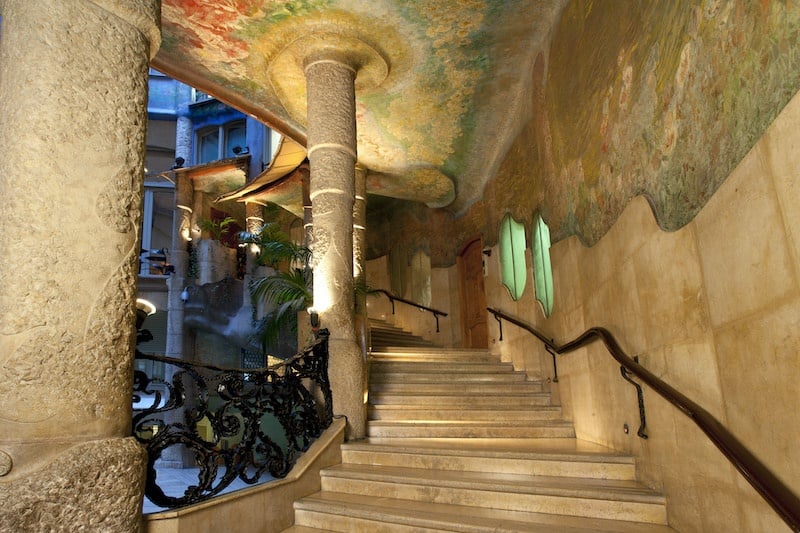
Wrought-iron balconies designed by Josep Maria Jujol are unique, with designs inspired by plant forms, enhancing Gaudí’s vision of harmonizing architecture with the natural world.
Inner courtyards
Casa Milà features two round courtyards, known as the Flower Courtyard and the Butterfly Courtyard.
Beyond their practical purpose, the courtyards feature murals by Aleix Clapés, showcasing mytho-botanical motifs that add an artistic touch and align with Gaudí’s vision of integrating art and nature. The courtyards contribute to the building’s asymmetrical “figure-eight” layout, enhancing its architectural complexity and innovation.
The Attic Loft (Whale Attic)
The Attic Loft, often referred to as the Whale Attic, was constructed with approximately 270 brick arches. These arches form a ribcage-like structure, like a whale’s belly. Originally, this unique space was designed as a laundry and storage area.
Today, the Attic Loft hosts the Espai Gaudí exhibition, featuring models, drawings, and videos that offer insights into Gaudí’s work and processes.
The Pedrera Apartments
The Pedrera Apartments offer a glimpse into early 1900s bourgeois living, with a period-style apartment displayed on the fourth floor of Casa Milà, where original furniture, doors, and decorative details are arranged to reflect the lifestyle of the era.
Gaudí designed custom door handles, curved ceilings, and utilized vibrant patterns throughout the interior. This comprehensive design reflects Gaudí’s commitment to creating cohesive and livable spaces that are as artistic as they are functional.
The sculptural rooftop
The rooftop terrace of Casa Milà features a series of chimneys, ventilation towers, stairwell covers, and skylights. Gaudí designed these elements to resemble abstract warriors or helmeted guardians, creating an otherworldly architectural panorama against the Barcelona skyline.
Each of these sculptural forms serves a dual purpose, blending function with aesthetic appeal. They cleverly disguise vents and stairwells, showcasing Gaudí’s signature style. Some elements are adorned with trencadís mosaics – a technique involving the use of broken marble, glass, and recycled cava bottles.
Gaudí also thoughtfully framed viewpoints on the terrace, directing attention towards significant landmarks like Mount Tibidabo and Sagrada Família.
Why is Casa Milà worth visiting?
Casa Milà is a must-visit destination in Barcelona. As one of Antoni Gaudí’s masterpieces, it provides insights into his innovative style and the impact of his work on modern architecture.
Architectural & historical significance:
Casa Milà is Gaudí’s last complete residential project, marking his mature architectural style. As a UNESCO World Heritage Site, it stands as an icon of innovation and design.
Its fluid forms and self-supporting facade have inspired new approaches to design and engineering worldwide.
Visitor experience highlights:
The rooftop terrace of Casa Milà is a standout feature, showcasing sculptural chimneys and ventilation towers designed as “warrior” forms. Visitors can enjoy city views and framed vistas of landmarks such as Sagrada Família.
The Espai Gaudí Attic Museum offers Gaudí’s design methods and inspirations. Through models and interactive exhibits, visitors gain insights into the innovative approaches that define Gaudí’s legacy.
Visiting the period-style apartment provides a vivid reconstruction of early 20th-century bourgeois life. This tour immerses guests in the lived experience of the era, highlighting the historical context and elegance of Gaudí’s residential design.
Variety of visit formats:
Casa Milà offers varied visit formats to suit different preferences. Daytime general admission allows for exploration at a leisurely pace, while the evening tours provide a more enhanced experience with audiovisual shows on the rooftop, complemented by a glass of cava.
Adding a guided audio tour is highly recommended, helping visitors to get more meaning from the spaces and adding to the overall visit.
Practical takeaways:
Casa Milà is often less crowded than Casa Batlló, allowing for a more relaxed visit. Despite this, it still offers an interesting design and valuable insights into Gaudí’s architectural vision.
Frequently Asked Questions about Casa Milà

What is Casa Milà?
Casa Milà is a building designed by Antoni Gaudí. Situated in the Eixample district of Barcelona, it serves as an example of the modernisme movement and is recognized as a UNESCO World Heritage site.
How long should I spend at Casa Milà?
A visit typically takes about 1-2 hours. This allows ample time to explore the rooftop, the Espai Gaudí exhibition in the attic, and the beautifully restored period-style apartments. Consider a guided tour to maximize your visit.
Is Casa Milà worth it?
Absolutely! Casa Milà offers a unique opportunity to understand Gaudí’s architectural vision and its influence on modern architecture. Its exhibits and architectural features make it a memorable part of any trip to Barcelona.
Who designed Casa Milà?
Antoni Gaudí is the mastermind behind Casa Milà. Known for his distinctive and innovative architecture, Gaudí’s contributions to Barcelona’s landscape are part of its history and culture.
What is Casa Milà used for?
Today, Casa Milà operates as a cultural center managed by Fundació Catalunya–La Pedrera. It hosts exhibitions, cultural events, and tours, offering visitors a chance to explore its historical and architectural significance.
When was Casa Milà finished?
Construction of Casa Milà began in 1906 and was completed in 1912.
What does Casa Milà mean?
“La Pedrera,” the nickname for Casa Milà, means “the stone quarry,” a reference to its facade made from local limestone.
What inspired Gaudí in the design of Casa Milà?
Gaudí was inspired by nature and organic forms, which is evident in the building’s wave-like facade and natural ventilation features. His use of light and space has inspired architects worldwide.
Why is Casa Milà famous?
Casa Milà is famous for its architectural innovations and its significant role in the modernisme movement.
What is Casa Milà made of?
The building is primarily constructed from stone, featuring a self-supporting stone facade and wrought-iron balconies. This construction allows for free-plan interiors, a signature of Gaudí’s architectural style.
Browse and book your tickets to Casa Milà today!
