
 Art Museums in Paris
 Zoos in Rome
 Theme Parks in Barcelona
 Historical Sites in Rome
 Distilleries in Edinburgh
 Fado Shows in Porto
 Paris
Paris Vienna
 Rome
Rome Florence
 Barcelona
 Porto
Porto Amsterdam
 Venice
 London
 Lisbon
 Berlin
 Milan
Milan Interactive Museums in New York
 Theme Parks in Orlando
 Art Museums in New York
 Zoos in Orlando
 Art Museums in Chicago
 Aquariums in Tampa
 Orlando
 Las Vegas
 New York
 Mexico City
 San Francisco
 Boston
 Atlanta
 Los Angeles
 Toronto
 Chicago
 Vancouver
 Seattle
 Water Parks in Dubai
 Theme Parks in Dubai
 Aquariums in Dubai
 Opera in Sydney
 Zoos in Sydney
 Art Museums in Singapore
 Dubai
Dubai Bangkok
 Abu Dhabi
 Bali
Bali Melbourne
 Phuket
 Sydney
 Cairns
 Tokyo
Tokyo Gold Coast
 Singapore
 Kuala Lumpur
 Louvre Tickets
 Opera Garnier Tickets
 Park Güell Tickets
 Sagrada Familia Tickets
 Milan Cathedral Tickets
 Colosseum Tickets
 Vatican Museums Tickets
 Versailles Tickets
 Alhambra Tickets
 Auschwitz Tickets
 Van Gogh Museum Tickets
 Casa Batllo Tickets
 Eiffel Tower Tickets
 Disneyland Paris Tickets
 Accademia Gallery Tickets
 Barberini Palace Tickets
 Porto Cathedral Tickets
 Sainte-Chapelle Tickets
3 Days in Paris: Complete Itinerary Guide (2025)


An insider’s guide to experiencing Paris authentically, efficiently, and memorably
Last Updated: November 2025
Next Review: April 2026
About Your Guide Author
📍Regular Paris visitor since 2018 | 🇮🇹 Native Italian speaker, fluent French
✈️ 20+ documented Paris visits | 💻 Technology professional with analytical approach to travel optimization | 🇫🇷Co-author of travel planning platforms (Palaceofversailles.paris & Paris-cruises.com series)
Why trust this guide? As a web developer and a systematic traveler, I plan Paris itineraries the way I optimize code. I test different routes, check real walking times, and look for ways to make each trip smoother. I have personally tried every recommendation in this guide during my visits from 2018 to 2024, with my latest trip in November 2024.
Why Paris Works Perfectly for a 3-Day Visit
Paris is perfect for short trips in a way few other big cities are. Its historic center is compact, with top attractions close together and easy to reach by metro. You can see the Eiffel Tower at sunrise, admire Impressionist art by midday, and watch the city light up from Montmartre in the evening—all in a single day.
What Makes 3 Days Ideal
The city’s great public transportation makes it easy to get between major sights, and the walkable neighborhoods let you see real Parisian life along the way. Three days is enough to visit the main monuments without feeling rushed, explore different areas, and even take a day trip to Versailles. This gives you a good mix of seeing a lot and still enjoying your time.
The truth about three days in Paris is that you won’t see everything—Paris is worth weeks—but you will get to feel the city’s spirit. You’ll see the famous monuments, enjoy its art, discover the charm of its neighborhoods, and have those special moments, like tasting a perfect croissant, seeing golden light on the Seine, or hearing accordion music in the metro, that make Paris so memorable.
How This Itinerary Works
Each day is split into morning, midday, afternoon, and evening sections. This helps you balance busy times with breaks and keeps you from getting tired of museums.
This guide focuses on both the famous sights everyone wants to see, like the Eiffel Tower, Louvre, and Versailles, and the real Paris you find beyond the postcards. You’ll visit world-famous places but also find quiet gardens, local bistros, and see the city from a local’s point of view.
This itinerary gives you clear suggestions, but Paris is best when you’re a little spontaneous. If you find an interesting museum or a great café, take your time there. The plan guides you but leaves room for your own discoveries.
Who This Guide Serves:
- First-time visitors wanting a comprehensive coverage of essential landmarks
- Couples seeking romantic experiences balanced with cultural depth
- Culture enthusiasts interested in art, history, and architecture
- Practical planners needing realistic timing and logistics
- Budget-conscious travelers requiring clear cost expectations
Day 1: The Monuments That Define the City
Morning: Eiffel Tower & Trocadéro (7:30 AM – 11:00 AM)

Start Time: 7:30 AM arrival at Trocadéro
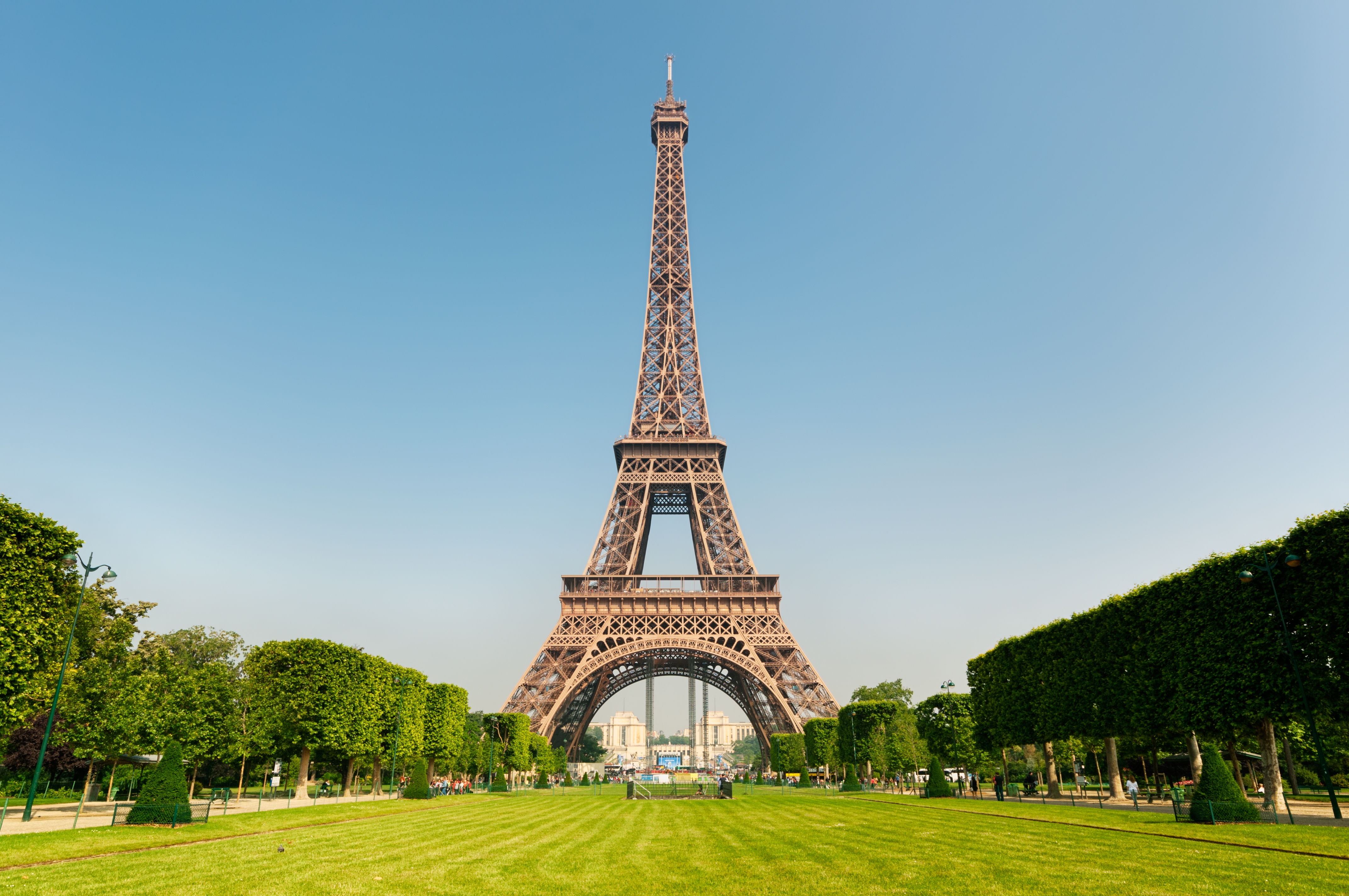
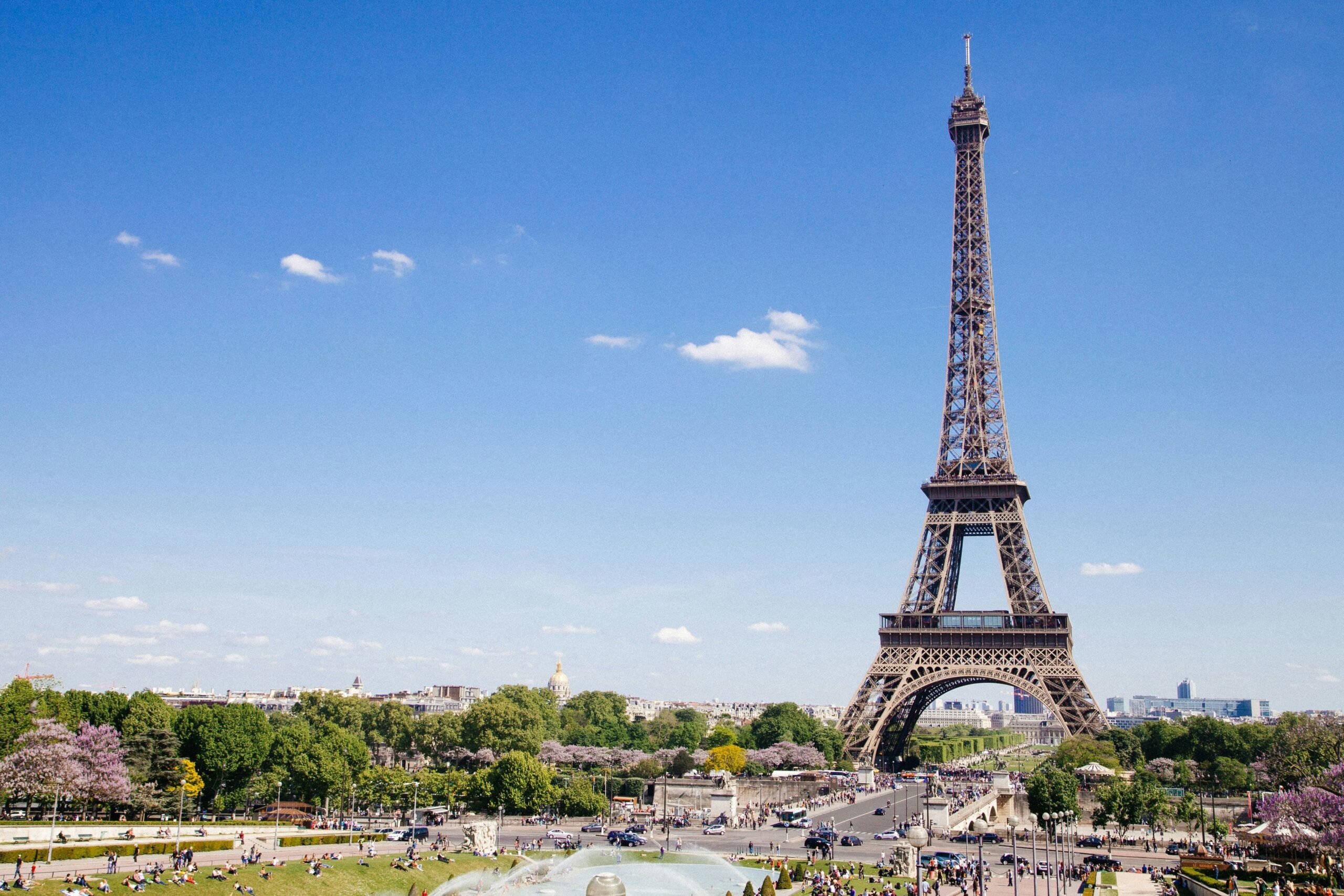
Start your Paris journey at Trocadéro, where you get the classic postcard view of the Eiffel Tower across the Seine. Early mornings have soft light for photos and very few people, so you can often enjoy this famous spot almost alone before 8:30 AM.
Getting There:
- Metro: Line 6 or 9 to Trocadéro station
- From the city center: 15-20 minutes via metro
- Exit: Follow “Jardins du Trocadéro” signs
Trocadéro Photography Strategy (7:30-8:15 AM):
The Trocadéro esplanade gives you the most famous view of the Eiffel Tower, but where you stand makes a difference.
- Best photo spot: Center of the esplanade between the two Palais de Chaillot wings
- Lighting: Eastern light at sunrise (roughly 8:00-8:30 AM in spring/fall) creates warm tones
- Composition tip: Include the Trocadéro fountains (when operational March-November)
- Crowd timing: Before 8:30 AM = usually under 20 people; after 9:30 AM = hundreds
Walking to the Tower (8:15-8:30 AM):
Walk across the Pont d’Iéna bridge (650 meters, about 8 to 10 minutes). The bridge also gives you unique views. If the river is calm, stop halfway to take photos of the reflections in the Seine.
Eiffel Tower Visit (8:30-10:30 AM):
Booking Information:
- Official website: toureiffel.paris
- Tickets release: 60 days in advance at midnight Paris time (CET/CEST)
- Summit tickets: Sell out within hours for popular times
- Recommended: Book as early as possible for your dates
Ticket Options (Verified January 2025):
| Access Level | Adult Price | Advance Booking | Typical Wait Without Ticket |
| Summit via elevator | €29.40 | Required | Not available without a ticket |
| 2nd floor via elevator | €18.80 | Strongly recommended | 45-90 minutes |
| 2nd floor via stairs | €11.80 | Optional (usually available) | 15-30 minutes |
My Recommendation for First Visit: Book the 8:30 AM or 9:00 AM summit ticket. Morning light is superior, crowds are minimal (about 40% of midday volume based on my observations), and you’ll start your Paris trip with the ultimate view. The price difference (€29.40 vs €11.80) is justified for the complete experience.
What to Expect at the Tower:
- Security screening: Plan 10-15 minutes before your ticket time
- Elevator to 2nd floor: 5-7 minutes
- Second elevator to summit: Additional 5 minutes
- Time at summit: Budget 30-45 minutes
- Total visit: Approximately 90-120 minutes
Pro Tips from Personal Testing:
- Bring a light jacket (summit is 5-8°C cooler, windier than ground level)
- Bathrooms available at ground level and 2nd floor (not at summit)
- Champagne bar on summit (€21 for glass, verified Jan 2025) = quintessentially Parisian moment
- Best views: North (Sacré-Cœur direction) and Southeast (Seine curve)
If Tickets Are Sold Out:
- Alternative 1: Stairs to 2nd floor (€11.80, tickets often available same-day, 674 steps)
- Alternative 2: Montparnasse Tower observation deck (€21, 360° views, no advance booking needed, shorter wait)
- Alternative 3: Visit tower exterior and gardens (free), return for evening illumination
Weather Contingencies:
- Heavy rain: Tower remains open; visibility reduced, but dramatic atmosphere
- Strong winds (35+ km/h): Summit may close; 2nd floor remains accessible
- Fog: Visibility under 100 meters common in autumn mornings; check @LaTourEiffel on X (Twitter) before departing
Midday: Île de la Cité & Notre-Dame (11:30 AM – 2:00 PM)

Travel from the Eiffel Tower: Metro Line 6 from Bir-Hakeim to Cité station (20 minutes) or RER C to Saint-Michel Notre-Dame (15 minutes)
Notre-Dame Cathedral: Status Update
Notre-Dame reopened on December 8, 2024, after the major fire in April 2019. Public access is now available, but some areas are still limited.
What’s Currently Accessible:
- ✅ Main nave for religious services and limited visits
- ✅ Self-guided visits during designated hours
- ✅ View restored Gothic architecture and cleaned stonework
- ❌ Towers remain closed indefinitely for ongoing restoration
- ❌ Treasury closed
- ❌ Crypt archaeological site (separate location; check crypte.paris.fr)
Visit Hours:
- Monday-Friday: 8:00 AM – 7:00 PM
- Saturday-Sunday: 8:00 AM – 7:15 PM
- Closed: No regular closing day
- Source: notredamedeparis.fr (official cathedral website)
Entry Requirements:
- Cost: FREE (donations accepted)
- Booking: Pre-registration required at notredamedeparis.fr
- Availability: Opens 7 days in advance at 12:01 AM Paris time
- ID required: Bring documentation matching your registration
- Arrival: 15 minutes before time slot for security screening
Booking Tip: Registration slots fill within 24-48 hours for weekend visits. Set a phone reminder for exactly 7 days before your intended visit date, register at midnight Paris time for best availability.
What to Expect Inside (Based on December 2024 Visit):
The restoration is remarkable—cleaned limestone appears almost white compared to the pre-fire darkened patina accumulated over centuries. However, be prepared for:
- Visible scaffolding in transept areas (restoration ongoing through 2026)
- Sections cordoned off with limited access
- Mandatory visitor flow patterns (cannot linger in specific areas)
- Visit duration: Approximately 30-45 minutes
- Photography permitted without flash
Current Restoration Progress:
- Nave: Complete
- Roof: 85% reconstructed
- Spire: Fully reconstructed (visible from exterior)
- Interior vaulting: Ongoing cleaning
- Full completion expected: 2026
- Updates: rebatirnotredamedeparis.fr
If Notre-Dame Registration Is Full:
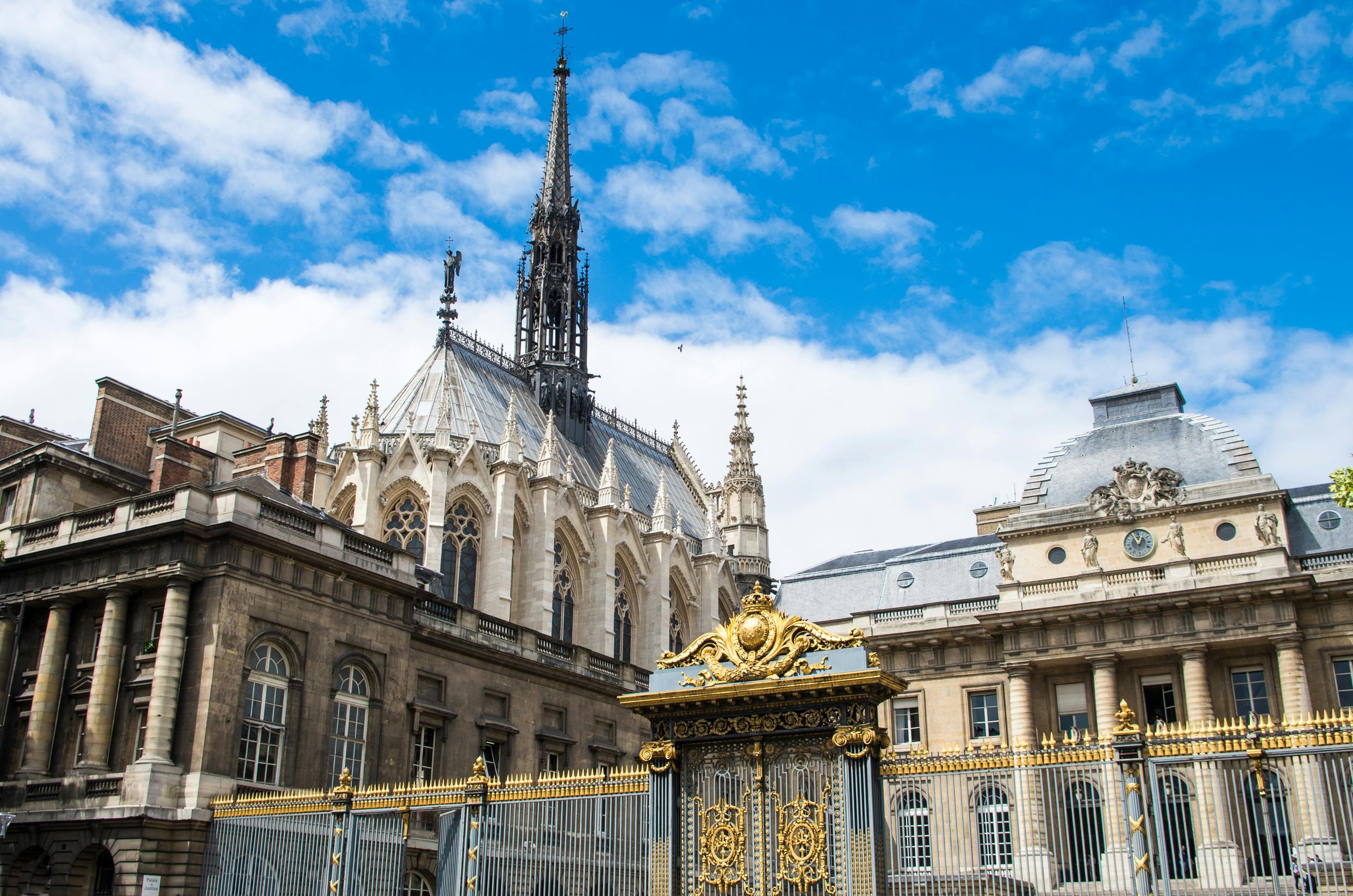
Sainte-Chapelle (5-minute walk from Notre-Dame)
📍 8 Boulevard du Palais, 75001
- Why visit: 13th-century royal chapel with spectacular stained glass windows
- Tickets: €13 (verified Jan 2025), book at sainte-chapelle.fr
- Advantage: Easier availability, stunning Gothic architecture
- Time needed: 45-60 minutes
Midday: Latin Quarter Lunch (1:30 – 2:30 PM)

The Latin Quarter’s narrow streets, local bookstores, and classic cafés show what real Parisian neighbourhood life is like, away from the busy tourist spots.
Lunch Options by Budget:
Budget Option: Marché Mouffetard
📍 Rue Mouffetard, 75005 (Metro: Place Monge)
- This market street has ready-to-eat food, cheese shops, and bakeries.
- Cost: €8-15 per person
- Hours: Tuesday-Sunday, 8:00 AM – 1:00 PM (best before 11:30 AM)
- Plan to buy picnic supplies here and enjoy your meal at the nearby Jardin des Plantes.
Mid-Range Option: Traditional Bistro
Try restaurants on the side streets off Boulevard Saint-Michel, between Rue des Écoles and Rue Soufflot.
- Prix fixe lunch typically: €16-24 (starter + main OR main + dessert)
- Check the menu posted outside before you go in.
- Red flags to avoid: Picture menus, aggressive hosts outside, “tourist menu” pricing
What to Look For:
- Handwritten daily specials board (indicates fresh ingredients)
- Majority French-speaking customers inside
- Small menu (5-8 options per course = quality focus)
Food Safety & Quality Indicators:
- Restaurant hygiene ratings displayed in window (look for “Très Satisfaisant”)
- Avoid places with extensive multilingual menus (usually indicates tourist-focused quality)
- Trust restaurants with visible kitchens
Afternoon: The Louvre (2:45 PM – 6:00 PM)

The Louvre has the world’s largest art collection, housed in a former royal palace. Its artworks cover everything from ancient civilizations to the 19th century. The building started as a medieval fortress and later became a Renaissance palace, reflecting centuries of French history.
Getting There:
Metro Line 4 from Cité to Palais Royal – Musée du Louvre (5 minutes)
Tickets & Pricing (Verified January 2025):
- Standard admission: €22
- Under 18 (any nationality): FREE
- EU residents under 26: FREE (bring passport)
- First Sunday of month (Oct-March): FREE for all (expect 3x normal crowds)
- Friday evening (after 6:00 PM): €22 (reduced crowds, extended hours until 9:45 PM)
Booking:
- Website: louvre.fr (purchase in English)
- Recommendation: Book 2-7 days in advance minimum
- Time slots: Every 30 minutes
- Sold out? Check the “waiting list” button—approximately 60% success rate within 2-4 hours—or Louvre tickets from trusted distributors.
Closed: Tuesdays (all day), January 1, May 1, December 25
Entry Points (Critical for Crowd Avoidance):
Most tourists line up at the Pyramid entrance. It’s best to avoid this spot.
Best entrance: Porte des Lions
- Location: South side, along Seine (Quai François Mitterrand)
- Crowd level: 60-70% less wait than Pyramid
- Opens: 9:00 AM daily (except Tuesday)
- Advantage: Direct access to Italian painting galleries
- Note: This entrance sometimes closes without warning. If that happens, use the Pyramid entrance as a backup.
Alternative: Carrousel du Louvre entrance
- Location: Underground mall, 99 Rue de Rivoli
- Access via metro without going outside
- Usually moderate crowds
Realistic Time Planning
The Louvre has about 35,000 artworks spread over 72,735 square meters. Many guides just say to “spend the afternoon at the Louvre,” but here’s what you really need to know:
| Visit Type | Duration | What You’ll See | Walking Distance |
| Greatest Hits | 2.5-3 hours | Mona Lisa, Venus de Milo, Winged Victory + select highlights | ~1.5 km |
| Satisfying Visit | 4-5 hours | Major works + 2 departments in depth | ~2.5 km |
| Comprehensive | 7+ hours | Multiple departments thoroughly | 5+ km |
My Recommended “First Visit” Route (3 hours):
This route prioritizes the most famous works while minimizing walking and backtracking.
1. Denon Wing – Italian Sculpture (Ground Floor, 20 min)
- Enter via Porte des Lions, immediately right
- Room 403: Michelangelo’s Slaves (Dying Slave and Rebellious Slave)
- These unfinished masterpieces show Michelangelo’s technique of “releasing” figures from marble
2. Denon Wing – Italian Painting (1st Floor, 50 min)
- Stairs to Room 711 (Grande Galerie)
- Mona Lisa: Room 711 (Salle des États)
Mona Lisa Strategy:
- Expect 3-5 layers of viewers, about 30-second viewing time
- Best times: Immediately at 9:00 AM opening OR after 5:00 PM
- Pro tip: While everyone photographs Mona Lisa, turn around—Veronese’s Wedding Feast at Cana (massive canvas, opposite wall) is usually empty and equally masterful
Other Italian highlights in this wing:
- Virgin of the Rocks – Leonardo da Vinci (Room 710)
- Liberty Leading the People – Delacroix (Room 700)
3. Denon Wing – Greek & Roman Antiquities (Ground Floor, 30 min)
- Back downstairs to Room 345
- Venus de Milo: Room 345 (Sully Wing transition)
- 2nd century BCE Greek sculpture
- Missing arms remain mysterious—likely held now-lost objects
- Less crowded than Mona Lisa, easier viewing
4. Winged Victory Staircase (Daru Staircase, 15 min)
- Room 703 landing
- Winged Victory of Samothrace
- Photograph from the bottom of the stairs for the most dramatic angle
- 90% of visitors photograph from the top (less flattering perspective)
- 2nd century BCE Greek sculpture celebrating naval victory
5. French Painting – Neoclassical & Romantic (1st Floor, 35 min)
- Rooms 702-700 (Mollien Wing)
- The Raft of the Medusa – Géricault (Room 700)
- The Coronation of Napoleon – David (Room 702)
- Grande Odalisque – Ingres (Room 702)
6. Rest Break at Café Mollien (20 min)
- Denon Wing, 1st Floor, near French Painting galleries
- €5-7 espresso/pastry (verified Jan 2025)
- Bathrooms adjacent
- Sit, rest feet, process what you’ve seen
Total: Approximately 3 hours | 1.5 km walking
What You’re Missing (And That’s Acceptable for First Visit):
- Egyptian Department (Sully Wing) – Alone justifies a separate 3-hour visit
- Napoleon III Apartments – Opulent Second Empire rooms (Richelieu Wing)
- Islamic Art (under glass pyramid courtyard) – Stunning collection worth a dedicated visit
- Northern European Painting – Vermeer, Rembrandt, Dutch Masters (Richelieu Wing, 2nd Floor)
Crowd Timing Data (Based on Museum Density Observations):
Best times (percentage of maximum capacity):
- Friday 6:00-9:00 PM – 35-45% capacity (evening hours)
- Monday/Thursday 9:00-10:30 AM – 40-50% capacity
- Wednesday afternoon – 55-65% capacity
- Saturday 10:00 AM-4:00 PM – 85-95% capacity (avoid if possible)
- Sunday – 95-100% capacity (worst day; avoid unless mandatory)
Evening: Montmartre & Sacré-Cœur (7:00 PM – 10:00 PM)

Montmartre is known for its cobblestone streets, its history as the home of artists like Picasso and Van Gogh, and the impressive Sacré-Cœur Basilica. Together, these make it one of Paris’s most romantic and historic neighborhoods.
Getting There:
Metro Line 1 from Palais Royal to Anvers station (15 minutes), then walk uphill or take Montmartrobus (electric shuttle)
Sacré-Cœur Basilica:
📍 35 Rue du Chevalier de la Barre, 75018
Entry & Access:
- Basilica interior: FREE entry
- Opening hours: 6:00 AM – 10:30 PM daily
- Dome climb: €7 (300 steps, panoramic views, open 9:30 AM-8:00 PM May-Sept, until 5:00 PM Oct-Apr)
- Dress code: Shoulders and knees covered (strictly enforced)
Evening Visit Strategy (7:00-8:30 PM):
Evening visits offer several advantages:
- Softer golden-hour light for photography
- Smaller crowds than midday (approximately 40% fewer visitors)
- Illuminated Paris views as sun sets
- Eiffel Tower visible in distance (southwest)
The Steps Experience:
The steps in front of Sacré-Cœur offer great views over Paris. As the city lights come on, you can watch the Eiffel Tower start its hourly sparkling light show.
What to expect:
- This is an informal gathering spot where both locals and tourists sit on the steps.
- Street musicians typically perform until 9:00-9:30 PM
- You may see wine and beer vendors. While selling alcohol here is technically illegal, it is usually tolerated.
- Be aware of pickpockets. Keep your belongings secure and try not to get distracted.
Eiffel Tower Light Show:
- Sparkles for 5 minutes at the top of every hour after sunset
- Visible from Sacré-Cœur steps (bring phone zoom or binoculars)
- The final show at 10:00 PM is especially magical.
Montmartre Evening Exploration:
After visiting Sacré-Cœur, take a walk through Montmartre’s historic streets.
Place du Tertre (5-minute walk behind basilica)
- Small square where artists set up easels
- Extremely touristy but historically significant (artistic center since 1800s)
- Portrait sketches: €20-50 (negotiate price before sitting)
- Better for atmosphere than art quality
Better Montmartre Streets to Explore:
- Rue de l’Abreuvoir: Picturesque residential street, frequently photographed
- Rue Cortot: Calmer lane, former home to Renoir and Utrillo
- Rue des Saules: Descends past Montmartre vineyard (tiny, historic)
Dinner in Montmartre:
Timing: 8:30-10:00 PM (French dinner hours)
Montmartre has many restaurants aimed at tourists, but there are ways to spot the good ones:
Good signs:
- Handwritten menu board (changes daily)
- Majority French-speaking diners inside
- Menu in French with English translations (not English-primary)
- Modest signage (not flashy tourist-focused marketing)
Red flags:
- Person outside aggressively recruiting customers
- Picture menus
- “Set menu €15” large signs
- English-only menus
Budget: €25-45 per person for traditional bistro (starter + main + wine)
As an alternative, you can buy wine and cheese from local shops and have a picnic on the Sacré-Cœur steps while you watch the sunset and the city lights.
Return to Accommodation:
- Metro Line 12 from Abbesses station (avoid walking downhill in dark)
- Last metro: Approximately 12:40 AM Sunday-Thursday, 1:40 AM Friday-Saturday
- Night buses (Noctilien) run after the metro closes
Day 2: Art, Neighborhoods & the Seine
Morning: Musée d’Orsay (9:00 AM – 12:00 PM)

The Musée d’Orsay is set in a beautiful Beaux-Arts railway station, originally built for the 1900 World’s Fair. Today, it houses one of the best collections of Impressionist and Post-Impressionist art in the world.
Getting There:
Metro Line 12 to Solférino station (3-minute walk to museum)
Tickets & Entry (Verified January 2025):
- Standard admission: €16
- EU residents 18-25: FREE (bring ID)
- Under 18 (any nationality): FREE
- First Sunday of month: FREE for all (expect large crowds)
- Booking: musee-orsay.fr (highly recommended to skip entry line)
- Closed: Mondays
Why Visit Musée d’Orsay vs. The Louvre:
If you need to pick just one museum, or want a shorter visit, the Musée d’Orsay has some clear advantages:
- Manageable size (3 floors vs. Louvre’s overwhelming scale)
- Focused collection (1848-1914 art only)
- More cohesive experience (2-3 hours vs. 5+ hours at Louvre)
- Less crowded overall
- More “approachable” masterpieces (Impressionism resonates with most visitors)
Building Architecture:
The museum’s large clock windows let in lots of natural light, making it a perfect place to see Impressionist paintings that focus on light and its effects.
Recommended Route (2.5-3 hours):
Ground Floor (1848-1870): Realism & Early Works
- Start here when museum opens (least crowded)
- Courbet, Millet, early sculptures
- Skip if time is limited
Level 5 (Top Floor): The Main Event – Impressionism & Post-Impressionism
Head directly to Level 5 (elevator or escalators) for:
Gallery 29-36: Impressionist Masters
- Monet: Water Lilies series, Rouen Cathedral series, Impression, Sunrise
- Renoir: Bal du moulin de la Galette (joyful dancing scene), portraits with characteristic soft light
- Degas: Ballet dancers, behind-scenes theater life
- Manet: Olympia (scandalous 1865 painting), Le Déjeuner sur l’herbe
Morning tip: The eastern galleries get sunlight through the clock windows, which looks a lot like the light Impressionist artists loved to paint. Galleries 34-36 are especially nice between 9:30 and 10:30 AM.
Gallery 35 (Personal Favorite): Claude Monet – Blue Water Lilies (around 1916-1919)
- Less famous than Orangerie series but equally beautiful
- This gallery is usually quiet, so you can enjoy the art without crowds.
- Late Monet style shows increasingly abstract approach
Post-Impressionist Galleries (Level 5):
- Van Gogh: Starry Night Over the Rhône, Bedroom in Arles, intense self-portraits
- Cézanne: Still lifes and landscapes that influenced Cubism
- Gauguin: Tahitian paintings, bold colors
- Toulouse-Lautrec: Moulin Rouge posters and paintings
Level 2 (Middle Floor): Art Nouveau & Decorative Arts
- Skip if tired, or save for end
- Beautiful furniture, jewelry, architectural models from 1900 Paris
Museum Café (Behind the Clock – Level 5):
- €6-8 coffee/pastry (verified Jan 2025)
- Spectacular views through the clock face across the Seine
- The best time to visit is between 10:30 and 11:00 AM, before the lunch crowd arrives.
- Can see Louvre and Right Bank through the clock
Photography:
- Permitted without flash
- No selfie sticks
- The clock window itself is highly photogenic (photograph the clock mechanism with Paris view beyond)
Crowd Management:
- Crowds come in waves: right at opening (9:00-9:30 AM), when tour groups arrive (11:00 AM-12:30 PM), and during the afternoon peak (2:00-4:00 PM).
- Quietest: 9:00-10:30 AM, after 4:30 PM
- Most crowded galleries: Van Gogh, Monet Water Lilies
- Least crowded: Ground floor Realism galleries, Level 2 decorative arts
Time Budget:
- Quick visit (highlights only): 1.5 hours
- Recommended visit: 2.5-3 hours
- Comprehensive visit: 4+ hours
Midday: Latin Quarter, Shakespeare and Company & Luxembourg Gardens (12:30 PM – 3:30 PM)
The Latin Quarter got its name in medieval times, when Sorbonne students spoke Latin. Today, it’s still known as Paris’s intellectual and literary neighborhood.
Getting There:
Exit museum, walk across Pont de la Concorde and along Seine (15 minutes) OR Metro Line 12 to Saint-Michel station
Shakespeare and Company Bookstore
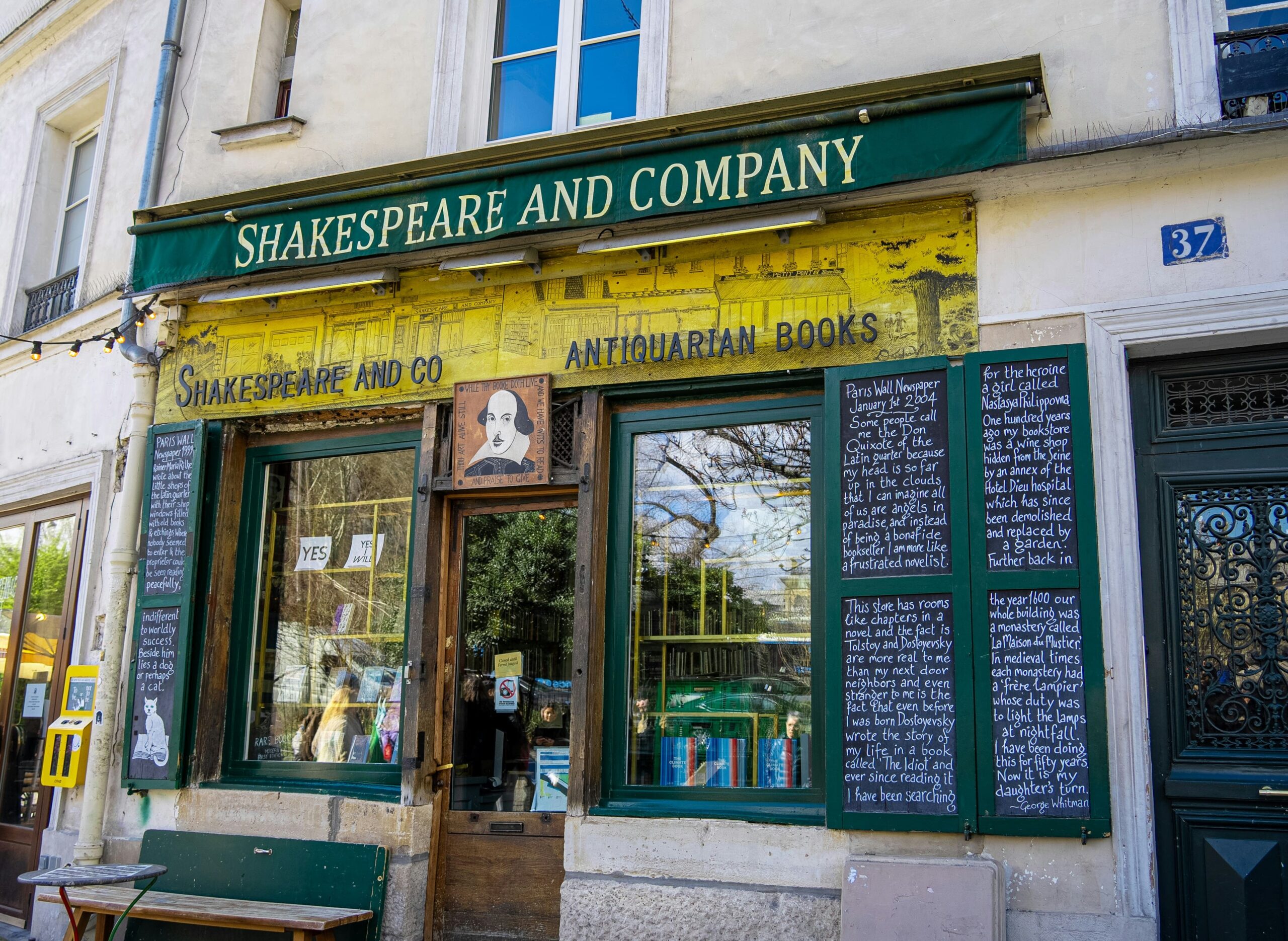
📍 37 Rue de la Bûcherie, 75005 (directly across Seine from Notre-Dame)
This famous English-language bookstore has been open since 1951. The original shop was started in 1919 by Sylvia Beach, who published James Joyce’s Ulysses. The current store, opened by George Whitman, became a meeting spot for Beat Generation writers in the 1950s and 60s.
Hours: 10:00 AM – 10:00 PM daily
What to expect:
- Narrow, crowded warren of books stacked floor-to-ceiling
- Upstairs library with typewriter (free to use)
- Small café adjacent (€4-7 coffee, often crowded)
- Usually 20-40 people browsing simultaneously
- Tourist destination but genuinely functioning independent bookstore
Why visit:
- Literary pilgrimage for book lovers
- Unique atmosphere and history
- Browse without obligation to purchase
- 15-30 minutes sufficient for most visitors
Luxembourg Gardens (Jardin du Luxembourg)

📍 Boulevard Saint-Michel / Rue de Vaugirard entrance, 75006
These formal French gardens were created for Marie de Medici in 1612. They have fountains, sculptures, neat flowerbeds, and the Grand Bassin pond, where children sail toy boats. It’s a classic Paris scene that hasn’t changed for generations.
Metro: Luxembourg (RER B) or Odéon (Lines 4, 10)
Hours: 7:30 AM – sunset (varies by season: 4:30 PM winter, 9:30 PM summer)
Entry: FREE
What makes Luxembourg Gardens special:
Unlike tourist-heavy Tuileries Gardens, Luxembourg attracts locals:
- Sorbonne students studying on chairs
- Families with children at playground and pond
- Chess players at permanent tables (east side)
- Joggers on perimeter paths
- Parisians reading newspapers in iconic green chairs
Recommended activities (1-2 hours):
1. Lunch Option: Picnic
- Purchase supplies at Marché Saint-Germain (covered market, 5-minute walk)
- Or buy sandwiches along Boulevard Saint-Michel (€6-10)
- Sit in signature green metal chairs (free, moveable throughout gardens)
- Choose shaded area under trees or sunny spot near flowerbeds
2. Grand Bassin (Central Pond)
- Children can rent toy sailboats (€4 for 30 minutes)
- Surrounded by seating with fountain views
- Popular photography spot
3. Medici Fountain (Northeast corner)
- Romantic shaded grotto with pond
- Less crowded than main areas
- Beautiful reflection photos
4. Statues & Sculptures
- 106 statues throughout gardens
- Queens of France and famous French women series
- Statue of Liberty scale model (southwestern area)
5. Orangerie & Greenhouse
- Palm and tropical plant displays
- Free entry to greenhouse viewing
6. People-watching
- Primary activity—simply sit, relax, and observe Parisian life
- Multi-generational park use
Practical details:
- Public bathrooms available (small fee, €0.50)
- Chairs are free (move anywhere you like, Parisian custom)
- Fountains operate April-October
- Book and newspaper kiosks sell reading material
- Avoid sitting on grass (signs indicate where permitted)
Insider perspective: This is where Parisians actually spend leisure time, unlike heavily touristed Tuileries. Spending 60-90 minutes here provides insight into everyday French life and offers mental rest between museum visits.
Afternoon: Panthéon & Le Marais (3:30 PM – 7:00 PM)
The Panthéon

📍 Place du Panthéon, 75005
Metro: Cardinal Lemoine (Line 10), Luxembourg (RER B)
Hours: 10:00 AM – 6:30 PM daily (April-Sept until 6:00 PM Oct-March)
Tickets: €13 (verified Jan 2025)
Closed: January 1, May 1, December 25
The Panthéon was first built as a church for Paris’s patron saint, Geneviève. During the French Revolution, it became a national mausoleum to honor France’s great citizens.
What to see (45-60 minutes):
The Crypt: Famous figures buried here include:
- Voltaire & Rousseau: Enlightenment philosophers (opposite sides, symbolic of their ideological differences)
- Victor Hugo: Author of Les Misérables and The Hunchback of Notre-Dame
- Marie Curie: First woman honored for her own achievements (1995), pioneering physicist and chemist
- Émile Zola: Novelist and journalist
- Alexandre Dumas: Author of The Three Musketeers (reinterred 2002)
- Josephine Baker: Entertainer and French Resistance member (most recent addition, 2021)
The Building:
- Neoclassical architecture inspired by Rome’s Pantheon
- Massive dome (83 meters high)
- Foucault’s Pendulum, a scientific instrument and art piece, shows how the Earth rotates.
- Murals depicting St. Geneviève and French history
Why visit:
- Understanding French historical values (whom France chooses to honor)
- Impressive architecture rivaling Rome
- Less crowded than major museums
- Air-conditioned respite on hot days
Le Marais District

Walk from Panthéon: 15-20 minutes via Rue des Francs-Bourgeois, or Metro Line 1 to Saint-Paul
Le Marais (literally “the marsh”) transformed from medieval swampland to aristocratic district in the 17th century, survived Haussmann’s 19th-century renovations that destroyed much of medieval Paris, and evolved into the city’s Jewish Quarter and, more recently, LGBTQ+ center and trendy shopping district.
What makes Le Marais distinctive:
Architecture:
- Medieval street plan preserved (narrow winding lanes)
- 17th-century hôtels particuliers (private mansions converted to museums)
- Oldest houses in Paris (dating to 1400s)
Cultural Identity:
- Historic Jewish Quarter (Rue des Rosiers)
- LGBTQ+ nightlife center (Rue des Archives, Rue Sainte-Croix de la Bretonnerie)
- Art galleries and concept stores (Rue de Turenne, Rue Charlot)
Recommended Le Marais activities (2-3 hours):
1. Rue des Rosiers (Jewish Quarter)
- Traditional kosher bakeries and falafel restaurants
- L’As du Fallafel: Famous falafel stand (€8-10, expect 15-30 minute queue)
- Jewish history museum (Musée d’Art et d’Histoire du Judaïsme) if interested
2. Place des Vosges
- Oldest planned square in Paris (completed 1612)
- Perfectly symmetrical red-brick architecture
- Arcaded galleries with art galleries and tea rooms
- Victor Hugo’s house (now museum) at #6
- Central garden with fountains (FREE entry, perfect photo spot)
3. Shopping & Galleries
- Vintage clothing stores (Rue de Turenne, Rue du Bourg-Tibourg)
- Concept stores blending fashion/art/design (Merci on Boulevard Beaumarchais)
- Small art galleries (many free to enter and browse)
- Design boutiques
4. Architecture Walking
- Look up at building details, carved doors, interior courtyards
- Many buildings allow access to courtyards during business hours
- Hôtel de Sully (62 Rue Saint-Antoine): Enter courtyard to see Renaissance architecture
Alternative Museum Option: Centre Pompidou

📍 Place Georges-Pompidou, 75004 (Northern edge of Le Marais)
⚠️ Status Update: Centre Pompidou closed for major renovations 2025-2030 (verified January 2025)
Alternative Modern Art Options:
- Musée de l’Orangerie: Monet’s Water Lilies panoramas (Tuileries Gardens, €12.50)
- Fondation Louis Vuitton: Contemporary art in striking Frank Gehry building (Bois de Boulogne, €16, requires advance booking)
- Palais de Tokyo: Cutting-edge contemporary art (near Trocadéro, €15)
Evening: Seine River Cruise (8:00 PM – 9:30 PM)

Departure Points:
- Port de la Bourdonnais (near Eiffel Tower)
- Pont Neuf (Île de la Cité)
- Multiple companies: Bateaux Mouches, Bateaux Parisiens, Vedettes du Pont Neuf
Ticket Options:
- Standard cruise: €15-18 (1 hour)
- Cruise with champagne: €20-25
- Dinner cruise: €60-130 (2-3 hours, advanced booking required)
- Booking: Company websites or GetYourGuide, Viator (often discounted)
What to Expect:
A Seine cruise gives you easy views of Paris’s famous monuments, all lit up at night. The river shaped the city’s history and is still its symbolic heart.
Landmarks visible from river:
- Eiffel Tower (passes close, best views around 9:00 PM during sparkle show)
- Notre-Dame exterior (illuminated, particularly dramatic post-restoration)
- Louvre riverside façade
- Musée d’Orsay (lit clock visible)
- Pont Alexandre III (most ornate bridge, golden sculptures)
- Conciergerie (medieval palace/prison on Île de la Cité)
Timing recommendation:
- 9:00 PM departure: Captures Eiffel Tower sparkle show (hourly, 5 minutes)
- Earlier departure (7:00-8:00 PM): Sunset golden hour lighting
- Avoid: Midday cruises (harsh light, less atmospheric)
Cruise experience:
- Open-air upper deck (best views, cooler temperatures)
- Enclosed lower deck (heated/air-conditioned, partially obstructed views through windows)
- Multilingual audio commentary (typically 10-12 languages via headphones or speakers)
- Duration: 60-75 minutes
- Crowding: Varies by season (summer = packed, winter = comfortable)
In my opinion, some people call Seine cruises “touristy,” but seeing the city lit up at night is truly special. The glowing monuments, reflections on the water, and the sparkling Eiffel Tower make it worth the price. If you’re on a budget, walking along the Seine at night is free and gives you similar views.
Alternative: Walking the Seine at Night (FREE)
Walk the Left Bank quays from Pont de l’Alma (near Eiffel Tower) to Île Saint-Louis (approximately 3.5 km, 45 minutes). You’ll pass most cruise landmarks while maintaining flexibility to stop for photos or riverside wine from convenience stores (€5-8 per bottle).
Day 3: Versailles & Grand Finale
Morning to Early Afternoon: Palace of Versailles (8:00 AM – 2:30 PM)

Travel from Paris:
RER C train from central Paris stations (Saint-Michel Notre-Dame, Musée d’Orsay, Invalides) to Versailles Château – Rive Gauche station
Journey details:
- Duration: 40-60 minutes depending on departure station
- Frequency: Every 15-20 minutes
- Cost: €7.10 round trip (verified Jan 2025) – included in Paris Visite travel pass zones 1-4
- Ticket: Purchase from RATP machines or counters (credit cards accepted)
- Walk from station: 10 minutes to palace entrance (follow crowds and signs)
Be sure to check the RER C schedule before you travel, since not all branches go to Versailles. Look for trains marked “VICK” or “Versailles Château Rive Gauche” on the departure boards.
Ticket Options (Verified January 2025):
| Ticket Type | Price | What’s Included | Booking Needed? |
| Passport Ticket | €21 | Palace + Gardens + Trianon Estate | Yes – strongly recommended |
| Palace Only | €19.50 | State Apartments + Hall of Mirrors | Yes – sells out regularly |
| Gardens Only (Musical Days) | €10.50 | Gardens with fountains/music shows | Can purchase on arrival |
| Free First Sunday (Nov-March) | FREE | Everything (except Musical Garden days) | Expect 2-3x crowds |
Official Website: chateauversailles.fr (English available)
Advanced booking advantage:
- Avoid waiting in long ticket lines, which can take 30 to 90 minutes if you don’t buy tickets in advance.
- Guaranteed entry on your chosen day
- Timed entry slots help keep the crowds manageable.
Closed: Mondays, January 1, May 1, December 25
Crowds & Timing Strategy:
During the busy season, about 27,000 people visit Versailles each day. Planning your timing is important.
Best arrival time: 8:30-9:00 AM (palace opens 9:00 AM)
- Security queue before opening: 15-30 minutes
- Once you’re inside, you’ll have about 30 to 45 minutes to explore before it gets crowded.
- Tour groups start arriving between 10:00 and 11:00 AM, making the palace much busier.
- After 10:30 AM, the Hall of Mirrors gets very crowded.
Weather considerations:
- The gardens are at their best in spring, from April to June, when flowers are blooming and the fountains are running.
- In summer, from July to August, it’s hottest and most crowded, but the gardens stay open the longest.
- In fall, from September to October, you’ll find moderate crowds and colorful changing leaves.
- Winter, from November to March, is cold but much less crowded. Some fountains are turned off during this time.
Recommended Visit Route (4-5 hours total):
1. Palace Interior (1.5-2 hours)
Enter through Entrance A (with an advance ticket) or Entrance B (after purchasing tickets).
Key rooms not to miss:
State Apartments:
- Hercules Salon (first room, sets grandeur tone)
- War Salon & Peace Salon (bookend Hall of Mirrors)
- King’s Chamber (where Louis XIV slept and held morning audiences)
- Hall of Mirrors: 73 meters long, 357 mirrors reflecting windows overlooking gardens
- Built 1678-1684 to demonstrate French wealth and power
- The Treaty of Versailles ending WWI signed here (1919)
- Best photos: From southern entrance looking north (morning light)
Royal Chapel:
- A two-story baroque chapel where royal family attended daily mass
- Gold leaf, organ, painted ceiling by Antoine Coypel
Queen’s Apartments:
- Where Marie Antoinette lived
- Restored to 1780s appearance
- Note the hidden door she used to escape revolutionary mob (1789)
Crowds management:
- Most tourists gather in the Hall of Mirrors, so move through it quickly the first time.
- Spend more time in the quieter side rooms, like the King’s Apartments and the Queen’s bedchamber.
- Go back to the Hall of Mirrors after about 30 minutes, when it’s often less crowded.
2. Gardens of Versailles (2-2.5 hours)
The gardens cover 800 hectares and were designed by André Le Nôtre in the formal French style, with geometric shapes, symmetry, and a sense of human control over nature.
What to see:
Fountains & Groves:
- Latona Fountain: Near the palace, mythological scene with frogs
- Apollo Fountain: Grand fountain at head of Grand Canal, symbol of Sun King
- Colonnade Grove: Circular marble colonnade, peaceful
- Ballroom Grove: Outdoor performance space with cascade waterfall
Musical Fountains Show:
- Dates: April-October, Saturdays-Sundays plus some Tuesdays
- Times: Various sessions 11:00 AM – 6:00 PM
- What happens: Fountains operate choreographed to Baroque music
- Is it worth it? Yes. The gardens were designed to showcase moving water, so seeing the fountains in action is a key part of the experience.
- Schedule: Check chateauversailles.fr before visiting
Grand Canal:
- 1.6 km long cross-shaped canal
- Rent rowboats (€17/hour, spring-fall only)
- Walk the perimeter for a perspective of the palace from a distance
- Food stands and restroom facilities at the far end
Gardens admission:
- FREE most days
- €10.50 on Musical Fountains/Gardens days (April-October weekends)
3. Trianon Estate (Optional – Add 1.5-2 hours)
If you have time and energy left, the Trianon Estate offers a more intimate experience compared to the grand palace.
Distance from palace: 20-minute walk (or petit train shuttle, €8.50 round trip)
Grand Trianon:
- Smaller pink marble palace built for Louis XIV’s private retreats
- Simpler (but still royal) rooms
- Less crowded than main palace
Marie Antoinette’s Estate:
- Petit Trianon: Neoclassical château given to Marie Antoinette
- Hameau de la Reine (Queen’s Hamlet): Rustic “farm” where queen played peasant
- Thatched cottages, working farm, deliberately pastoral
- Demonstrates 18th-century romanticized view of rural life
- It’s a fascinating contrast to the formal style of the main palace.
Here’s my honest take: The Trianon Estate is great for history fans, but it does mean a lot more walking. If you’re tired after the palace and gardens, feel free to skip it—you’ve already seen the heart of Versailles. But if you’re still interested and have energy, it gives you a unique look at how Marie Antoinette tried to get away from court life.
Practical Versailles Information:
Food:
- Restaurant options: Limited inside palace grounds, expensive (€15-25)
- Better strategy: Purchase picnic supplies before leaving Paris or at Versailles town near station
- Picnic locations: Grand Canal lawn areas, various garden spots (allowed and common)
- Bringing food: Permitted in gardens, not inside palace
Facilities:
- Bathrooms: Inside palace (limited, queues), at gardens restaurants
- Coat check: Available at palace entrance (recommended—palace is warm year-round)
- Baby changing: Available at major bathroom facilities
Walking:
- Palace to Grand Canal: 1 km
- Palace to Trianon Estate: 1.5 km
- Total walking for comprehensive visit: 4-6 km
- Bring comfortable shoes (non-negotiable)
Wheelchair accessibility:
- Palace ground floor accessible
- Some upper floors inaccessible
- Gardens flat and accessible
- Wheelchairs available to borrow (reserve in advance)
Return to Paris: Aim to depart Versailles by 2:00-2:30 PM to have afternoon/evening in Paris. RER C trains run frequently; journey back 45-60 minutes to central Paris.
Late Afternoon: Champs-Élysées & Arc de Triomphe (3:30 PM – 6:00 PM)
Getting There:
Metro Line 1 to Charles de Gaulle – Étoile station (direct from several central Paris points)
The Champs-Élysées
📍 Avenue des Champs-Élysées, from Place de la Concorde to Arc de Triomphe (1.9 km)
This wide boulevard connects Place de la Concorde to the Arc de Triomphe. It was designed during Napoleon’s reign as a triumphal route and has become one of the world’s most famous shopping streets. What you’ll find:
Lower Champs-Élysées (Place de la Concorde to Rond-Point):
- Formal gardens and parkland
- Grand Palais and Petit Palais (exhibition halls)
- Less commercial, more elegant
Upper Champs-Élysées (Rond-Point to Arc de Triomphe):
- International luxury brands: Louis Vuitton, Cartier, Guerlain
- Chain stores: Zara, Sephora, Disney Store
- Cafés and restaurants (tourist-focused prices: €8-12 for coffee)
- Movie theaters including historic cinemas
A quick reality check: Today, the Champs-Élysées is very commercial, with most stores being international chains you can find anywhere. Parisians rarely shop here; it’s mostly for tourists. Still, the wide boulevard, historic buildings, and views of the Arc de Triomphe make it feel grand.
My advice: Walk the avenue once to experience it—it takes about 15 to 25 minutes from the metro to the Arc. Enjoy the impressive buildings and the famous atmosphere, but don’t spend too much time here. For better shopping, try Le Marais, Saint-Germain, or the big department stores like Galeries Lafayette or Le Bon Marché.
Late afternoon refreshment option: Ladurée (75 Avenue des Champs-Élysées): Famous macaron shop with tea salon, expensive but iconic (€7 for box of 6 macarons, €8-15 for tea/coffee with pastry, verified Jan 2025)
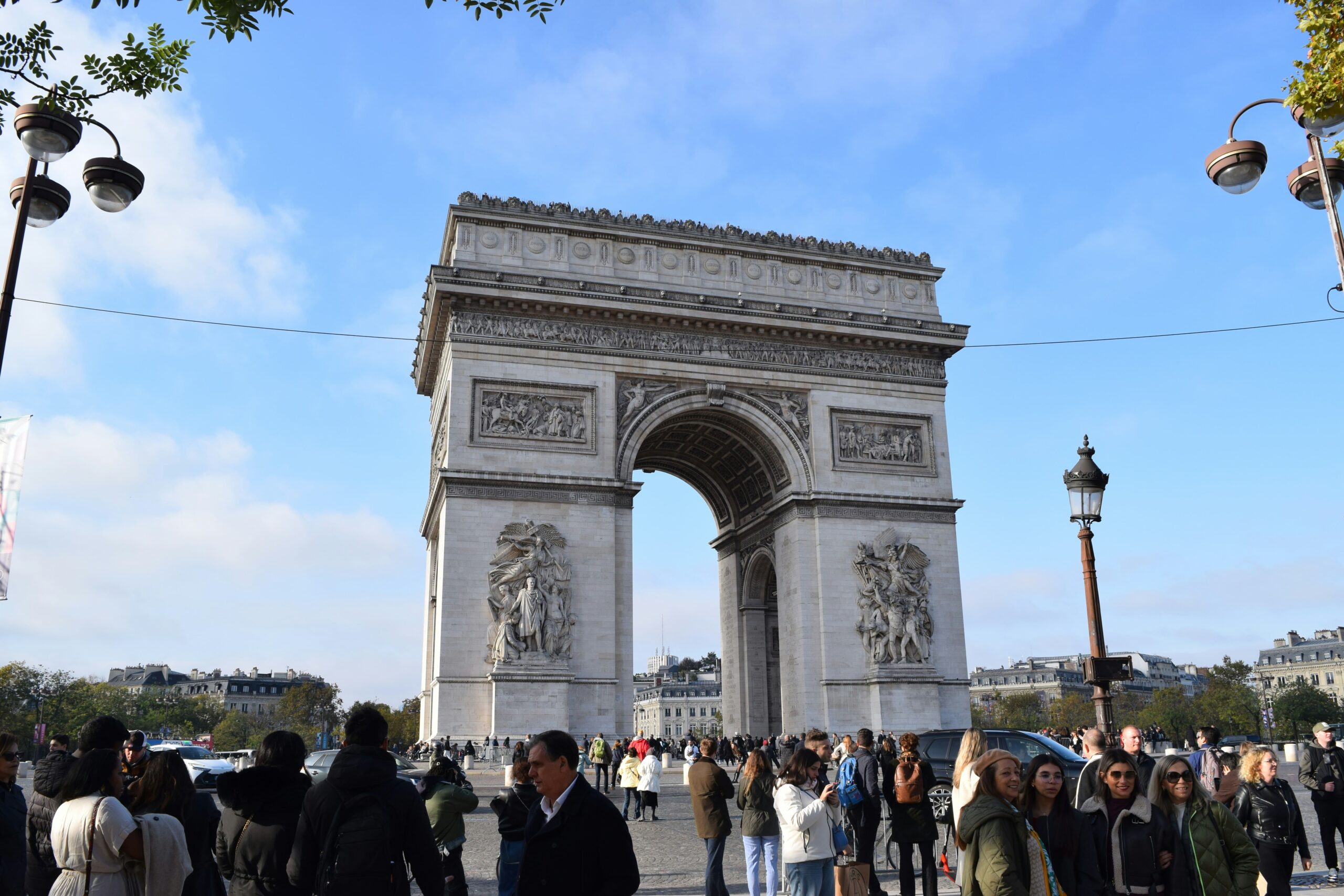
Arc de Triomphe
📍 Place Charles de Gaulle, 75008
Tickets: €13 (verified Jan 2025)
Hours: 10:00 AM – 10:30 PM daily (April-Sept), until 10:00 PM Oct-March
Closed: January 1, May 1, May 8 (morning), July 14 (morning), November 11 (morning), December 25
Napoleon commissioned the Arc de Triomphe in 1806 to honor his Grand Army, though he never saw it completed (finished 1836). The monument commemorates French military victories and honors Unknown Soldiers from both World Wars.
Access & Critical safety note: The Arc sits in the center of Place de l’Étoile, where 12 avenues converge in a chaotic roundabout with no traffic rules. NEVER attempt to cross the street to reach it.
Correct access: Underground passage from Champs-Élysées side (northwest corner of Avenue de la Grande Armée and Champs-Élysées). Follow “Arc de Triomphe” signs in underpass.
The Climb:
- 284 steps spiral staircase (no elevator for visitors)
- Intermediate stopping platforms
- The climb is physically demanding, so consider your fitness level before starting.
- Not recommended: mobility issues, heart conditions, claustrophobia
Views from Top:
The panoramic terrace provides 360° views across Paris:
- West: La Défense business district (modern towers)
- East: Champs-Élysées extending to Place de la Concorde, Louvre visible beyond
- North: Montmartre and Sacré-Cœur
- South: Eiffel Tower (perfect for photos, especially evening light)
You’ll get a unique view: The 12 avenues radiating from the Arc, designed by Haussman, form a perfect star pattern that you can only see from above. This view alone makes the climb worthwhile.
Photography:
- Best time: 6:00-7:30 PM golden hour light
- Eiffel Tower clearly visible for photos (zoom lens helpful)
- 360° vantage allows Paris orientation understanding
Ground level (no ticket needed):
- Tomb of the Unknown Soldier beneath arch
- Eternal flame rekindled daily at 6:30 PM
- Sculptures on arch exterior (view from terrace or ground)
Time needed: 45-60 minutes total (including climb and viewing)
Alternative if not climbing: Walk around Place de l’Étoile perimeter using pedestrian crossings on each of the 12 radiating avenues. Views of Arc from ground level are impressive, and you’ll save €13 and physical exertion.
Evening: Farewell to Paris (7:00 PM – 10:00 PM)
Your final evening offers several options depending on energy levels, interests, and budget.
Option 1: Opéra Garnier Performance
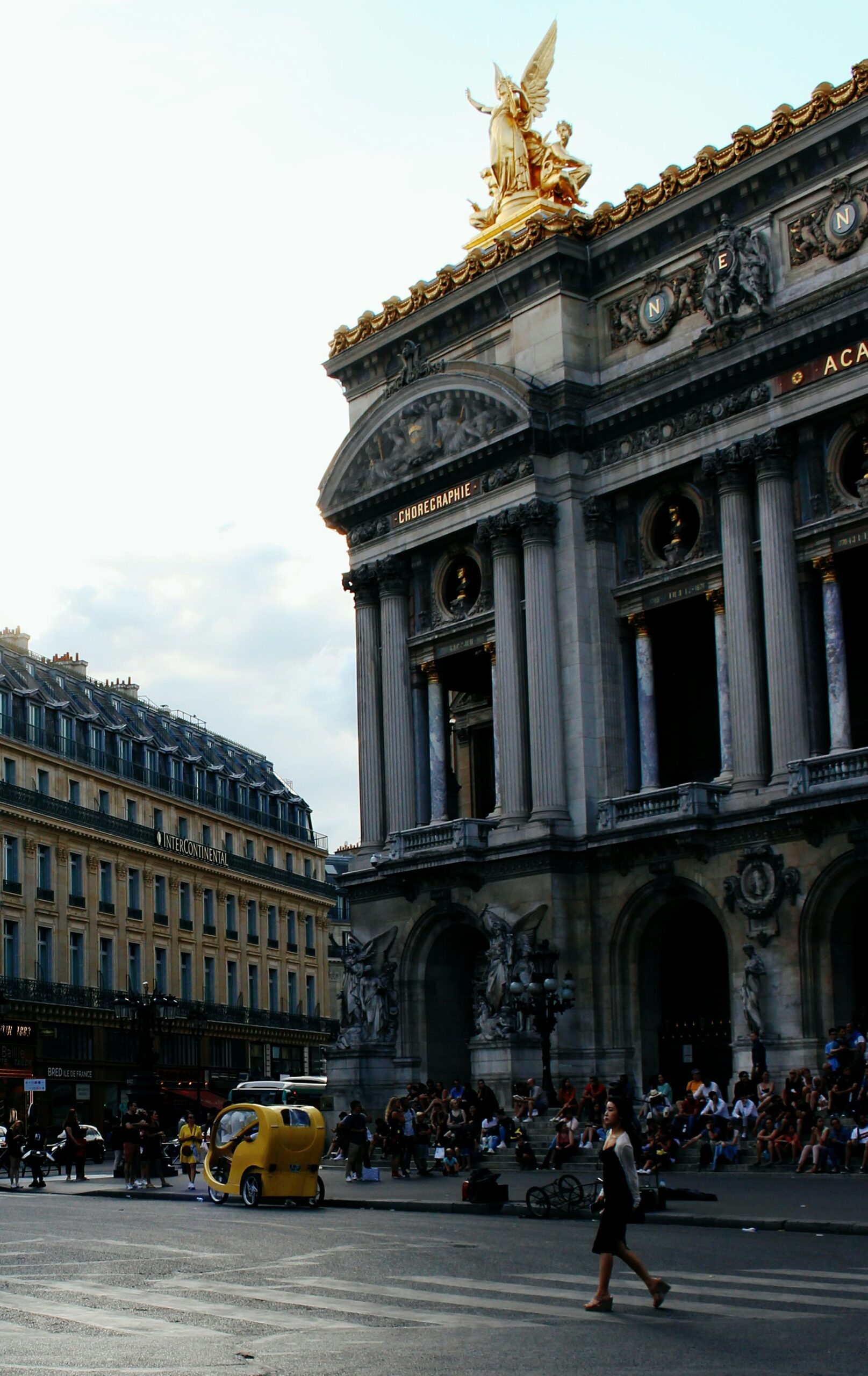
📍 Place de l’Opéra, 75009
If you love: Opera, ballet, classical music, ornate architecture
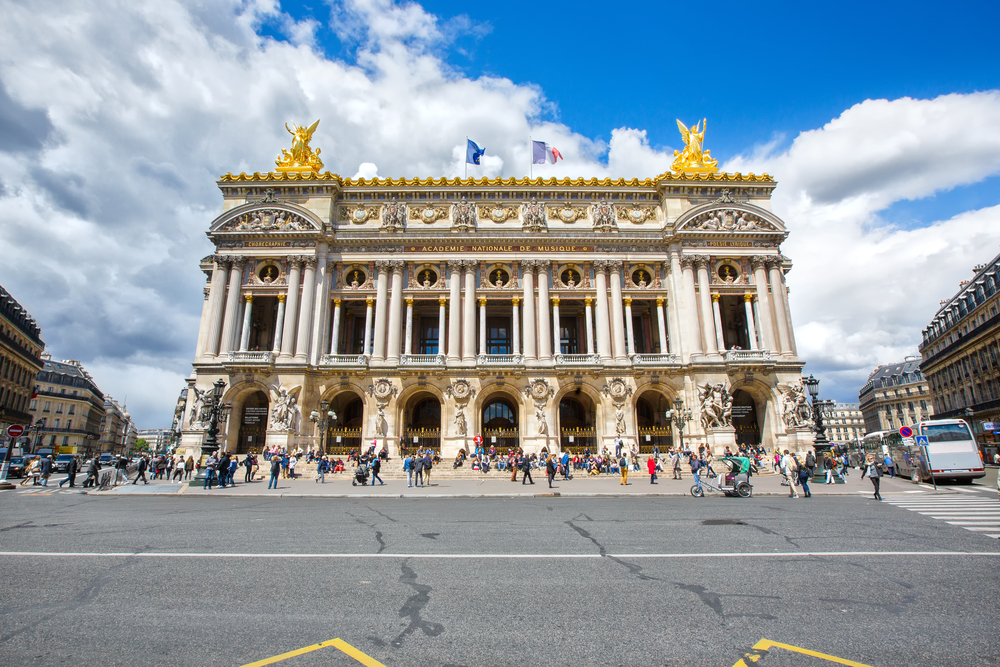
The Palais Garnier, built in 1875, is a work of art in itself. It features lavish Second Empire style, a grand staircase, a chandelier-lit auditorium, a Chagall ceiling painting, and even a legendary underground lake that inspired the Phantom of the Opera.
Tickets:
- Performance tickets: €10-240 depending on production and seat
- Booking: operadeparis.fr (book weeks/months in advance for popular shows)
- Last-minute: Rush tickets sometimes available day-of at box office (€10, limited availability)
- What’s on: Schedule varies—opera, ballet, classical concerts
Dress code: Smart casual minimum; many attendees dress formally (Parisians use opera as occasion for elegant dressing)
Building visit without performance:
- Self-guided tours: €14 (10:00 AM – 5:00 PM, except during rehearsals/performances)
- Guided tours: €19 (English tours available, check schedule)
Option 2: Moulin Rouge Cabaret

📍 82 Boulevard de Clichy, 75018 (Pigalle district)
If you love: Spectacular entertainment, can-can dancing, Belle Époque Paris nostalgia
The legendary Moulin Rouge cabaret has operated continuously since 1889, representing Parisian nightlife’s most famous tradition.
Shows:
- Times: 9:00 PM and 11:00 PM nightly
- Duration: Approximately 2 hours
- Prices: €87-420 depending on seating and meal options (verified Jan 2025)
- Booking: moulinrouge.fr (advance booking essential, often sells out weeks ahead)
Ticket options:
- Show only with champagne: €87-110
- Show with dinner: €210-420
- VIP seating: Front rows, premium service
What to expect:
- 100 performers, elaborate costumes, feathers, sequins
- Can-can dancing, acrobatics, juggling, magic
- Lavish set designs with moving stages and water features
- Loud music, flashing lights, energetic atmosphere
- Photography/video prohibited during show
Dress code: Smart casual (jeans acceptable, but no sportswear/shorts/flip-flops)
A quick reality check: Moulin Rouge is pricey and very tourist-focused. The shows are impressive and it’s a real part of Parisian cultural history. Whether it’s worth the cost depends on your budget and how much you enjoy cabaret. Some people see it as a once-in-a-lifetime treat, while others prefer a quieter evening in Paris.
Option 3: Seine Evening Walk (FREE)

If you prefer: Quiet reflection, photography, budget-friendly finale
A final evening walk along the Seine provides peaceful closure to your Paris journey.
Suggested route (2-3 hours):
Start: Pont Alexandre III (most ornate bridge, golden sculptures, Art Nouveau lampposts)
Direction: Walk east along Right Bank quays
Landmarks passed:
- Grand Palais illuminated dome
- Place de la Concorde obelisk and fountains
- Tuileries Gardens (closed at night but visible through gates)
- Louvre pyramid glowing
- Pont des Arts (pedestrian bridge, views toward Île de la Cité)
- Île de la Cité and illuminated Notre-Dame
- Continue to Île Saint-Louis (quieter residential island, ice cream shops open until 10:00-11:00 PM)
Sunset timing:
- Summer (June-Aug): 9:00-9:45 PM
- Spring/Fall: 7:30-8:30 PM
- Winter: 5:00-5:30 PM
Evening atmosphere:
- Locals jogging, walking dogs, gathering with friends
- Street musicians on bridges (particularly Pont Saint-Louis)
- Booksellers’ boxes closed but scenic
- Significantly fewer tourists than daytime
- Romantic lighting creates entirely different Paris feeling than midday
Seine-side refreshments:
- Purchase wine from supermarkets or corner stores (€5-10 per bottle)
- Sit on quay walls or stone steps (common, socially acceptable)
- Snacks from boulangeries (usually open until 8:00 PM)
This walk is free, but it gives you a truly authentic Paris experience. You’ll see the city as it really is, with the river, the famous monuments, and the lights that make Paris the City of Light.
Safety: Seine embankments are generally safe and well-lit, but use standard urban awareness (keep valuables secure, stay in populated areas). After 11:00 PM, areas become quieter.
Before You Go: Essential Planning Information
Best Times to Visit Paris
Spring (April-June):
- Pros: Mild temperatures (12-20°C), flowering gardens, moderate crowds, café terraces open
- Cons: Occasional rain showers, prices increasing toward summer
- Best months: May-early June (after Easter crowds, before summer peak)
Summer (July-August):
- Pros: Longest days (sunset ~9:30 PM), warm weather, Paris Plages (temporary beaches along Seine), outdoor concerts
- Cons: Hottest temperatures (25-35°C), most crowded, highest prices, many locals on vacation (some restaurants closed)
- In August, many Parisians go on vacation, so the city can feel less local, but all major tourist sites stay open.
Fall (September-November):
- Pros: Comfortable temperatures (10-18°C), fewer tourists than summer, lower prices, autumn colors in parks
- Cons: Shortening days, increasing rain, some attractions reduce hours
- Best months: September-October (pleasant weather, manageable crowds)
Winter (December-March):
- Pros: Lowest prices, smallest crowds, festive Christmas markets (Dec), cozy café culture, museums uncrowded
- Cons: Cold (3-8°C), short days (sunset ~5:00 PM), rain/occasional snow, some gardens less attractive
- Best period: December for Christmas atmosphere and lights
My recommendation: May or September balance ideal weather with manageable crowds and reasonable prices.
Accommodation by Paris District (Arrondissement)
Paris is made up of 20 arrondissements, or districts, that spiral out from the city center. Each one has its own style and price range.
Budget (Hostels, Budget Hotels: €30-90/night):
11th Arrondissement (Bastille/Oberkampf):
- Young, energetic nightlife
- Excellent restaurants, bars
- Metro: Lines 1, 5, 8, 9
- Character: Trendy, artistic, diverse
13th Arrondissement (Chinatown):
- Authentic Asian restaurants
- Residential, less touristy
- Metro: Lines 6, 7
- Character: Local, multicultural, budget-friendly
Mid-Range (€90-180/night):
5th Arrondissement (Latin Quarter):
- Student neighborhood, lively
- Close to Notre-Dame, Panthéon
- Excellent food, bookstores
- Metro: Lines 4, 7, 10, RER B
- Character: Intellectual, historic, central
3rd/4th Arrondissements (Le Marais):
- Trendy shopping, nightlife
- Historic architecture
- Central location
- Metro: Lines 1, 8, 11
- Character: Fashionable, LGBTQ+-friendly, vibrant
Luxury (€180-500+/night):
7th Arrondissement (Eiffel Tower/Invalides):
- Elegant residential
- Eiffel Tower views possible
- Upscale restaurants
- Metro: Lines 8, 12, 13, RER C
- Character: Refined, quiet, prestigious
1st Arrondissement (Louvre/Tuileries):
- Maximum central location
- Walking distance to major sites
- Luxury shopping
- Metro: Lines 1, 7, 14
- Character: Tourist hub, convenient, expensive
Booking platforms:
- Hotels: Booking.com, Hotels.com (compare prices)
- Apartments: Airbnb, VRBO (often better value for 3+ people)
- Hostels: Hostelworld
For the best choice and prices, try to book your accommodation 2 to 4 months ahead, especially for spring, summer, or Christmas.
Getting to Paris
Airports:
Charles de Gaulle (CDG) – Main international airport
- Distance: 25 km northeast of Paris
- Best transport: RER B train to central Paris (€11.45, 30-45 minutes, direct to Gare du Nord, Châtelet-Les Halles, Saint-Michel Notre-Dame, Luxembourg)
- Trains every 10-15 minutes, 5:00 AM-midnight
- Purchase tickets from machines in airport (credit cards accepted)
- Alternative: Le Bus Direct (€12, various Paris routes)
- Taxi: €50-55 fixed rate to Right Bank, €58 to Left Bank (30-60 minutes depending on traffic)
- Night: Noctilien night buses (after RER closes)
Orly (ORY) – Secondary airport
- Distance: 14 km south of Paris
- Best transport: Orlyval light rail + RER B (€14.40 total, 35-45 minutes) OR OrlyBus to Denfert-Rochereau metro station (€11.20, 30 minutes)
- Taxi: €35-41 fixed rate (25-40 minutes)
Train Stations:
- Gare du Nord: Eurostar from London (2h15min), Thalys from Brussels/Amsterdam
- Gare de Lyon: TGV from southern France, Switzerland, Italy
- Gare de l’Est: Trains from eastern France, Germany
- Gare Montparnasse: TGV from western/southwestern France
- Gare Saint-Lazare: Normandy, Versailles Rive Droite
All major stations connect to metro/RER networks.
Paris Transportation
Metro System:
Tickets & Passes (Verified January 2025):
- Single ticket (t+ ticket): €2.10 (valid 2 hours, one direction, includes transfers between metro/bus/tram)
- Carnet (10 tickets): €17.35 (saves €3.65)
- Paris Visite Pass: €13.95/day (1 day) to €43.30 (5 days, zones 1-5 including airports)
- Unlimited metro, bus, tram, RER within zones
- Consider if making 7+ trips per day
- Navigo Easy card: Reloadable card (€2 card, load t+ tickets) – convenient for short stays
Metro tips:
- Operates 5:30 AM to approximately 1:15 AM (2:15 AM Friday-Saturday)
- Keep ticket until exiting station (inspectors check)
- Watch for pickpockets on crowded trains (Lines 1, 4, 13 during rush hours)
- Some stations have long transfer walks (Châtelet-Les Halles, Montparnasse-Bienvenüe)
Walking:
Paris’s compact historic center makes walking often faster than metro for distances under 1.5 km.
Average walking times:
- Louvre to Notre-Dame: 15 minutes
- Notre-Dame to Latin Quarter: 10 minutes
- Eiffel Tower to Arc de Triomphe: 30 minutes
- Musée d’Orsay to Louvre: 15 minutes
Bring comfortable walking shoes, as you can expect to walk 8 to 15 kilometers each day while sightseeing.
Money-Saving Tips
Paris Museum Pass:
- Cost: €62 (2 consecutive days), €77 (4 days), €92 (6 days)
- Includes: 60+ museums and monuments (Louvre, Musée d’Orsay, Arc de Triomphe, Sainte-Chapelle, Versailles, etc.)
- Skip-the-line: Dedicated entrances at many venues
- Worth it if: Visiting 4+ paid attractions in 2 days
- Purchase: parismuseumpass.fr or at Paris tourism offices
Free Museum Sundays:
- First Sunday of every month: Many museums FREE (expect large crowds)
- Includes: Louvre, Musée d’Orsay, Pompidou (when open), Musée Rodin, Orangerie
Skip-the-Line Tickets:
Major attractions like the Eiffel Tower, Louvre, and Versailles often have 45 to 120 minute lines if you don’t buy tickets in advance. Paying a €2 to €5 booking fee can save you hours of waiting, so it’s always worth it.
Budget Meals:
- Boulangeries: Fresh baguette sandwiches €4-6, quiche €4-5, pastries €1.50-3
- Supermarkets: Monoprix, Franprix, Carrefour City have prepared foods, picnic supplies
- Prix fixe lunch menus: Many restaurants offer €15-25 two/three-course lunches (significantly cheaper than dinner)
- University cafeterias (Resto U): Open to public in some locations, €4-6 complete meals
Free Activities:
- Walking Seine embankments
- Window shopping Galeries Lafayette, Printemps (free rooftop terrace with Eiffel views at Galeries Lafayette)
- Notre-Dame exterior
- All Paris parks and gardens
- Père Lachaise Cemetery (famous graves: Jim Morrison, Oscar Wilde, Édith Piaf, Chopin)
- Free walking tour companies (tip-based)
Practical Tips
Cultural etiquette:
- Always greet shopkeepers/servers with “Bonjour” before requests.
- Use “Monsieur” or “Madame” when addressing strangers.
- Try to speak French first, even if it’s not perfect. People appreciate the effort.
What to Pack:
Clothing:
- Layering: Paris weather shifts quickly (bring light jacket even summer)
- Comfortable walking shoes: A must, since you’ll likely walk 8 to 15 kilometers each day.
- Scarf: Multi-purpose (warmth, style, covering shoulders in churches)
Electronics:
- Adapter: Type C/E European plug (two round pins)
- Voltage: 230V (check device compatibility)
- Power bank: For phone navigation/photography
Apps to Download:
- Citymapper or Google Maps: Navigation, metro routes
- RATP app: Official Paris metro/bus real-time schedules
- Google Translate: Camera translation feature for menus
- Paris Offline Map: Works without data
- The Fork (LaFourchette): Restaurant reservations, sometimes discounts
Safety:
Paris is usually safe, but pickpocketing can happen in tourist spots.
High-risk locations:
- Metro Lines 1, 4, 13 (tourist routes)
- Eiffel Tower surroundings
- Louvre/Tuileries area
- Sacré-Cœur steps
- Crowded metro trains during rush hours
Prevention:
- Front pockets for wallets/phones
- Crossbody bags are worn in front in crowded areas
- Don’t display expensive jewelry/electronics unnecessarily
- Ignore unsolicited approaches (petition scams, ring scam, bracelet scam)
Average Daily Budget Estimates
Budget Traveler (€100-140/day per person):
- Accommodation: €30-50 (hostel dorm/budget hotel)
- Food: €25-40 (supermarket breakfast, cheap lunch, affordable dinner)
- Transportation: €10-15 (metro tickets)
- Attractions: €15-25 (1-2 paid museums/day)
- Total: €100-140
Mid-Range Traveler (€180-280/day per person):
- Accommodation: €80-120 (mid-range hotel/apartment)
- Food: €50-80 (café breakfast, prix fixe lunch, proper restaurant dinner)
- Transportation: €15 (unlimited metro pass)
- Attractions: €25-40 (2-3 paid attractions, skip-the-line tickets)
- Miscellaneous: €10-20 (souvenirs, coffee, snacks)
- Total: €180-280
Luxury Traveler (€400+/day per person):
- Accommodation: €200-400+ (luxury hotel)
- Food: €100-200+ (fine dining experiences)
- Transportation: €30-60 (taxis/private transfers)
- Attractions: €50-100 (private guides, premium experiences)
- Shopping/extras: €100+
- Total: €480-860+
These estimates are based on sharing a room with a travel companion. If you’re traveling alone, expect to pay 40 to 60 percent more for accommodation.`
Paris Itinerary: Frequently Asked Questions
Is 3 days enough to see Paris?
Yes, three days are enough to see Paris’s main sights like the Eiffel Tower, Louvre, Notre-Dame, and Versailles. You can also explore neighborhoods such as Montmartre, Le Marais, and the Latin Quarter, and get a real sense of the city’s culture. While you won’t see everything—Paris could fill weeks—you’ll still capture its spirit and make great memories.
Should I purchase tickets beforehand for major attractions?
Yes, definitely buy tickets in advance for the Eiffel Tower, Louvre, and Versailles. These places often sell out days or weeks ahead, especially in the busy seasons. Without advance tickets, you could wait in line for one to two hours. The small booking fees (usually €1-3) are worth it for the time you save and the peace of mind.
How do I get from the airport to Paris?
From Charles de Gaulle (CDG):
- Best value: RER B train (€11.45, 35-45 minutes to central Paris)
- Most comfortable: Fixed-rate taxi (€50-58, door-to-door)
- Budget with luggage: Le Bus Direct (€12, stops at major points)
From Orly:
- Best: OrlyBus to Denfert-Rochereau + metro (€11.20 total)
- Taxi: €35-41 fixed rate
Always book your airport transfer through official sources to avoid unlicensed taxis.
What’s the best way to avoid long queues at Eiffel Tower and Louvre?
Skip-the-line tickets let you enter at your chosen time and help you avoid waiting at the ticket office.
Eiffel Tower:
- Book summit or 2nd-floor tickets 60 days in advance when sales open (midnight Paris time)
- Choose earliest available time slot (8:30-9:00 AM)
- Stair tickets to 2nd floor have shorter waits if summit sold out
Louvre:
- Purchase timed-entry tickets 2-7 days in advance at louvre.fr
- Enter via Porte des Lions (60-70% less crowded than Pyramid)
- Arrive at opening (9:00 AM) or after 4:00 PM for smaller crowds
- Friday evening (6:00-9:00 PM) has reduced attendance
Which neighborhoods have the best restaurants?
As a rule, the best restaurants are usually found on side streets, not the main roads. Look for places with French-speaking customers and handwritten daily menus.
- Le Marais (3rd/4th): Trendy bistros, international cuisine (falafel, Japanese), concept restaurants blending food and design. Great for younger, adventurous dining.
- Saint-Germain-des-Prés (6th): Traditional French bistros, historic brasseries, classic Paris dining experience. Higher prices but authentic atmosphere.
- Montmartre (18th): Romantic setting, mix of tourist traps (avoid Place du Tertre) and hidden gems on side streets. Research specific restaurants.
- Latin Quarter (5th): Student-friendly prices, diverse options, but avoid obvious tourist traps on main drags (Rue de la Huchette especially).
- Canal Saint-Martin (10th): Hip local scene, modern French cuisine, reasonable prices, fewer tourists.
Can I fit Disneyland Paris into this 3-day itinerary?
It’s not recommended. Disneyland Paris really needs at least a full day (and both parks take two days). If you add it, you’ll have to skip either Versailles or a full day in Paris, which takes away from the three-day Paris experience.
If Disneyland is your top priority, think about adding a fourth day just for it, or choose between Disney and Versailles for your third day.
Is Paris safe for solo travelers?
Yes, Paris is generally safe for solo travelers, including women. Just use the usual city precautions:
- Watch belongings in tourist areas and the metro (pickpockets target distracted tourists)
- Stay aware of your surroundings, particularly in the evening hours
- Avoid poorly lit areas after 11:00 PM
- Trust instincts: If something feels wrong, leave
- Use official taxis or Uber after dark rather than walking long distances alone
Emergency numbers work throughout the EU (112 is the universal emergency number). Also, there is a major police presence at tourist landmarks.
How much should I budget daily for 3 days in Paris?
- Budget: €100-140/day (hostels, supermarket meals, limited attractions)
- Mid-range: €180-280/day (3-star hotels, restaurant meals, museums, comfort)
- Luxury: €400+/day (4-5 star hotels, fine dining, private tours)
These budgets are based on two people sharing a room. If you’re traveling alone, expect to pay about 40-60% more for accommodation.
Do I need to speak French to visit Paris?
No. English is widely understood in:
- Hotels and tourist accommodations
- Major restaurants in the central districts
- Museums and attractions
- Tourist shops
Outside tourist areas and in local restaurants, you’ll need more French, but the Google Translate app can help with most situations.
What are the best evening activities besides shows?
- Seine river cruise: Illuminated monuments from a water perspective (€15-25, 60-75 minutes)
- Evening walk: Seine embankments, especially Île Saint-Louis to Trocadéro, reveal romantic lit Paris (FREE)
- Sunset at Sacré-Cœur: Watch city lights activate from Montmartre steps (FREE)
- Jazz clubs: Small venues in the Latin Quarter (Au Duc des Lombards, Caveau de la Huchette) offer an authentic atmosphere (€15-25 entry plus drinks)
- Wine bar: Parisian cave à vins (wine bars) provide a local experience, French wines by glass, cheese/charcuterie plates (€20-40/person)
- Late museum hours: Louvre Fridays until 9:45 PM, smaller crowds than daytime (regular €22 entry)
Wrap Up: Your Paris Journey
Over these three days, you’ve had a full introduction to Paris: the city of the Eiffel Tower and Versailles, the home of Impressionist art and medieval buildings, the neighborhoods filled with bistros and gardens, and the romantic evenings along the Seine.
What You’ve Experienced
On Day 1, you explored iconic Paris: the impressive engineering and views of the Eiffel Tower, the Gothic beauty of Notre-Dame, the world-class art at the Louvre, and the creative spirit of Montmartre.
On Day 2, you saw Paris’s artistic side at the Musée d’Orsay, experienced local life in the Latin Quarter’s bookshops and the calm of Luxembourg Gardens, walked through Le Marais’s old streets and Jewish history, and enjoyed views of the city from the Seine.
On Day 3, you visited the grand palace of Versailles, came back to stroll the wide Champs-Élysées and see the Arc de Triomphe, and finished with either a night out or a quiet moment by the Seine.
Beyond the Itinerary
Some of the best Paris memories happen by chance: finding a perfect croissant in a small bakery, enjoying a hidden gem of a museum, chatting with a local, or watching the afternoon sun turn a famous landmark into something magical.
This itinerary gives you a plan, but Paris is best enjoyed when you sometimes let yourself wander, spend extra time at a café, or keep coming back to a view you love.
Return Visits
If this is your first time in Paris, you’ve only seen a small part of what the city offers. On future trips, you might want to explore:
- Neighborhoods beyond tourist centers (Belleville, Batignolles, 13th arrondissement)
- Specialized museums (Musée Picasso, Rodin, Carnavalet, Cluny)
- Day trips (Giverny’s Monet gardens, Fontainebleau palace, Champagne region)
- Seasonal experiences (Christmas markets, summer outdoor cinema, autumn harvest festivals)
- Culinary deep dives (market tours, cooking classes, wine tastings, cheese education)
Many people come back to Paris again and again, discovering something new each time in this endlessly fascinating city.
Final Thought
For centuries, Paris has inspired artists, writers, and travelers. It’s not just the monuments or museums, but something hard to describe—a special light, a way of life, and a love of beauty and pleasure—that makes the city unique. These three days have shown you the real Paris and given you a glimpse of that deeper magic.
Come to Paris with an open mind, patience for any challenges, and a desire to look beyond the usual sights. The city takes time to reveal itself, but if you pay attention, you’ll find moments of unexpected beauty.
Bon voyage, and may your Paris days create memories lasting far beyond three days!
Image source: Unsplash.com