
 Top 15 Landmarks in London
 Best Neighborhoods in Rome
 Top 22 Attractions in Naples
 Amsterdam Nightlife Guide
 A Guide to Naples Catacombs
 The Florence Travel Guide
 A Guide to Underground Rome
 How to Plan the Perfect City Break in Athens
 The Prague Travel Guide
 The Vienna Travel Guide
 The Most Haunted Places in America
 A Guide to Iconic Sydney Landmarks
 Orlando Travel Guide
 The Top 10 Landmarks in Vancouver
 16 Hidden Gems in Los Angeles
 Top 10 Historical Sites in the US You Should Visit
 Las Vegas Travel Guide
 The Ultimate San Antonio Visitors Guide
 USA Bucket List: 37 Iconic Experiences and Hidden Gems
 15 Landmarks in Singapore You Shouldn’t Miss
 7 of The Best Desert Safari Experiences in Dubai
 What to Eat in Kyoto
 An Ultimate Dubai Travel Guide
 6 Wanderlust-Worthy Short Trips From Singapore
 The Best Weather in Europe in March: Travel Guide
 The Top 10 Cities in France
 The Ultimate Guide to Spending Easter in the UK
 34 Ireland & UK Bucket List Ideas
 A Guide To The Best Theme Parks in Italy
 12 Most Famous Museums in Spain
 An Ultimate Spain Bucket List Guide
 Netherlands Bucket List Travel Guide
 Easter in Europe: Easter Holiday Destinations & Traditions
 An Ultimate Italy Bucket List Guide
 How Long to Spend at MoMA
 Best Time to Visit The Louvre and Tips
 Dalí Theatre-Museum: All You Need to Know
 The Best Interactive Museums Around the World
 The Menil Collection: An Insider's Guide
 The Best Natural History Museums in the World
 A Full Guide To Rijksmuseum Highlights
 The 15 Best Art Museums in NYC
 Top 9 Things to See at The Louvre
 The Ultimate Uffizi Gallery Guide
 The Best Time to Visit Palace of Versailles
 All About Visiting Top of the Rock New York
 Visiting Pompeii: Your Ultimate Guide
 Casa Milà (La Pedrera): A Guide to Gaudí’s Work in Barcelona
 An Insider's Guide to visiting the Blue Lagoon
 How to get the best views of the Grand Canyon
 Inside the Sagrada Família in Barcelona
 Top 10 Reasons To Visit The Shard
 The Doge's Palace in Venice: History, Art & Casanova's Escape
 Muiderslot Castle: Discover Amsterdam’s Medieval Marvel
 The Perfect Buckingham Palace Visit: An Ultimate Guide
 The Best Time to Visit Keukenhof Gardens
 The Best Aquariums in the World
 Visiting Park Güell Barcelona: Best Time to Visit and Tips
 The Oldest Zoos in the World You Can Visit
 Best Time to Visit Disneyland Paris
 Gardaland Resort Italy: A Complete Guide
 The Best Water Attractions at PortAventura Aquatic Park
 11 Reasons Why Universal Studios Hollywood Is Worth It
Meet Victoria The T. Rex At The Melbourne Museum in 2024!

– This post was written by Layla Duranni –
Are you ready to get up close to one of the most complete Tyrannosaurus Rex skeletons ever discovered? You’re in luck – Victoria the T.Rex is visiting the Melbourne Museum!
Melbourne is a city full of art and history. Famous for its coffee culture and diverse food scene, Melbourne offers endless activities.
Smack dab in the city center, you’ll find Melbourne Museum. The museum is a prime destination for history and science enthusiasts – and the perfect place to learn about Victoria the dinosaur.
Located in Carlton Gardens, the museum displays a range of exhibits, from natural history to indigenous cultures.
About The Interactive Victoria The T.Rex Exhibition

The upcoming exhibition features “Victoria the T.rex,” one of the most complete Tyrannosaurus Rex skeletons ever found.
The Tyrannosaurus Rex, often referred to as T. Rex is one of the most famous and well-studied dinosaur species. They roamed the Earth approximately 66 million years ago. The T. Rex was a fearsome predator equipped with powerful jaws. It was capable of exerting a bite force of around 5,805 kg (12,800 lbs)!
This remarkable specimen includes 199 bones, measures over 12 meters long (40 ft), and stands 3.6 meters (10 ft) tall. Usually, archaeologists can recover around 10-15% of a T. Rex’s bones. Victoria is unusual – the museum has more than 50% of her skeleton intact!
The exhibition includes her reconstructed skull, weighing in at a whopping 139 kg (306 lbs). The actual skull will be displayed separately due to its weight, giving you the chance to get a close-up view of Victoria’s impressive jaw and fearsome teeth.
This exhibit will also give you plenty of information about the lifestyle of one of history’s most fearsome dinosaurs. The Melbourne Museum has taken measures to ensure Victoria’s bones remain well-preserved, maintaining them in climate-controlled conditions for future generations.
Getting ready to visit? Here are just a few reasons you don’t want to miss the exhibition!
5 Reasons You Don’t Want to Miss the T. Rex Exhibition
1. Interactive exhibition

Enjoy state-of-the-art technology, including holograms, and augmented reality that will make Victoria’s world come to life.
Multisensory installations will simulate how the T.rex might have experienced the world. The exhibition will educate you on the predatory techniques of T. Rex. Detailed reconstructions and multimedia displays will show you how Victoria was so skilled at catching her prey.
Her binocular vision provided depth perception for judging distances during an ambush. The structure of her legs supports theories that she could run at speeds up to 20 km (12 mi) per hour for short bursts.
Additionally, the robust build of her jaws and neck muscles was ideal for delivering powerful, bone-crushing bites.
You wouldn’t want to have been preyed on the run from this predator!
But luckily, thanks to the interactive exhibition and augmented reality, you can find out what it would have been like to roam with the dinosaurs without any real-life danger.
2. Go back in time
Gain knowledge about paleontology and prehistoric life through detailed exhibits, reconstructed fossils, and curated displays offering expert information.
Through the exhibition, you’ll learn about the Cretaceous period, the last era of the dinosaurs before their extinction 66 million years ago.
The Cretaceous period had a much warmer climate. There were no polar ice caps, and sea levels were significantly higher, leading to extensive shallow inland seas.
Modern mammals and birds had not yet evolved into their current forms. Plant life was also different, with an abundance of ferns, cycads, and conifers before flowering plants became more dominant.
The continental layout during the Cretaceous was also different. The supercontinent Pangaea had mostly split into two large landmasses: Laurasia in the north and Gondwana in the south.
Through the interactive displays, you will understand the environment Victoria lived in. You’ll learn how Victoria and other dinosaurs adapted, hunted, and interacted within their ecosystem.
3. Learn about T.Rex’s extraordinary hunting abilities
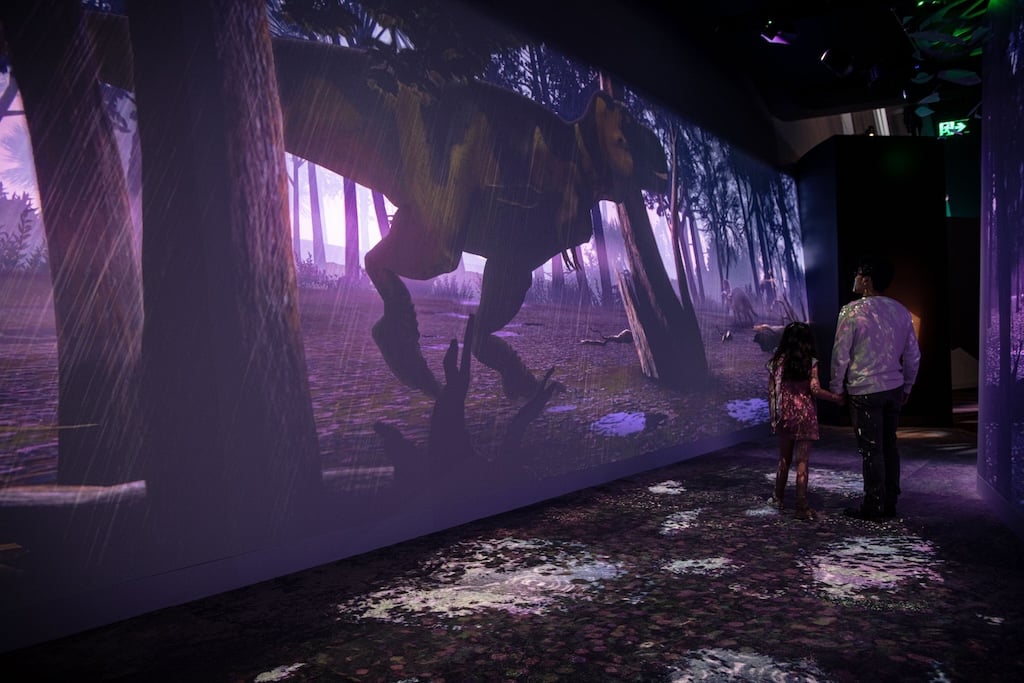
Through the exhibition, you’ll discover the T.rex’s advanced sensory abilities. Modern research using CT scans of T. Rex skulls suggests they had developed olfactory bulbs, indicating an excellent sense of smell.
This sense was crucial for hunting and scavenging. Additionally, studies of their inner ear structure imply they could hear low-frequency sounds well, helpful in detecting prey movements or communicating with each other.
4. Learn all about fossilization
The exhibition is designed for all ages, with interactive segments that will keep you and your kids focused on the fascinating life Victoria led.
You’ll also learn about the post-mortem journey of dinosaur bones. Victoria the T.rex’s bones provide clues about what happened after death.
You’ll find out all about the fossilization process, where minerals replaced organic material in her bones.
Learn how paleontologists interpret bite marks, breaks, and other damage on fossils to understand interactions with other predators and natural events.
This forensic approach uncovers the final chapter of Victoria’s life, providing us with a narrative of the prehistoric world.
5. Dual fossil display
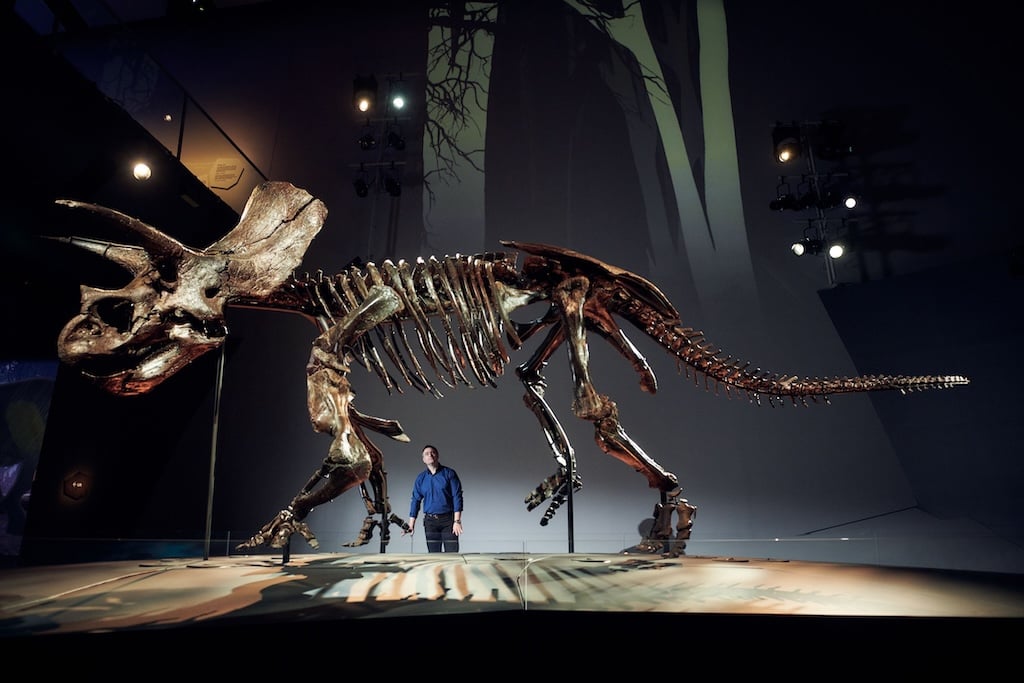
Why not see even more dinosaurs after you’ve explored Victoria’s life? Luckily, the museum also houses”Horridus,” the world’s most complete Triceratops fossil.
That means all you dinosaur enthusiasts get a unique opportunity to see both world-class fossils in one place!
Getting to the Museum

To visit the Melbourne Museum, you have several public transport options. Located at 11 Nicholson Street, Carlton, it’s easily accessible from the city center.
By Train or Tram: If you’re traveling by train, take the V/Line Train or the City Loop Train to Parliament Station. You can catch tram Route 86 or 96 to Stop 11 (Corner of Nicholson and Gertrude Streets). Or take the Free City Circle Tram to Victoria Parade
By Bus: Various bus routes have stops close to the museum, including Routes 250, 251, and 402. These will drop you off within walking distance – get off at Rathdowne Street.
By Car: If you prefer driving, there is limited parking available nearby. Museum car parks can be accessed from Rathdowne Street or Nicholson Street. Be aware of parking signs and restrictions.
Walking is also a good option if you’re staying in the Carlton area; the museum is well-marked and easily found.
Get your tickets to the Melbourne Museum T. Rex Exhibition

Ready to go back in time to the Cretaceous period and find out what life looked like for dinosaurs?
The exhibition runs from June 28, 2024, to October 20, 2024. Plan your visit and ensure you don’t miss out on the chance to get face-to-face with one of history’s most significant dinosaurs!
Get your skip-the-line tickets here!
